
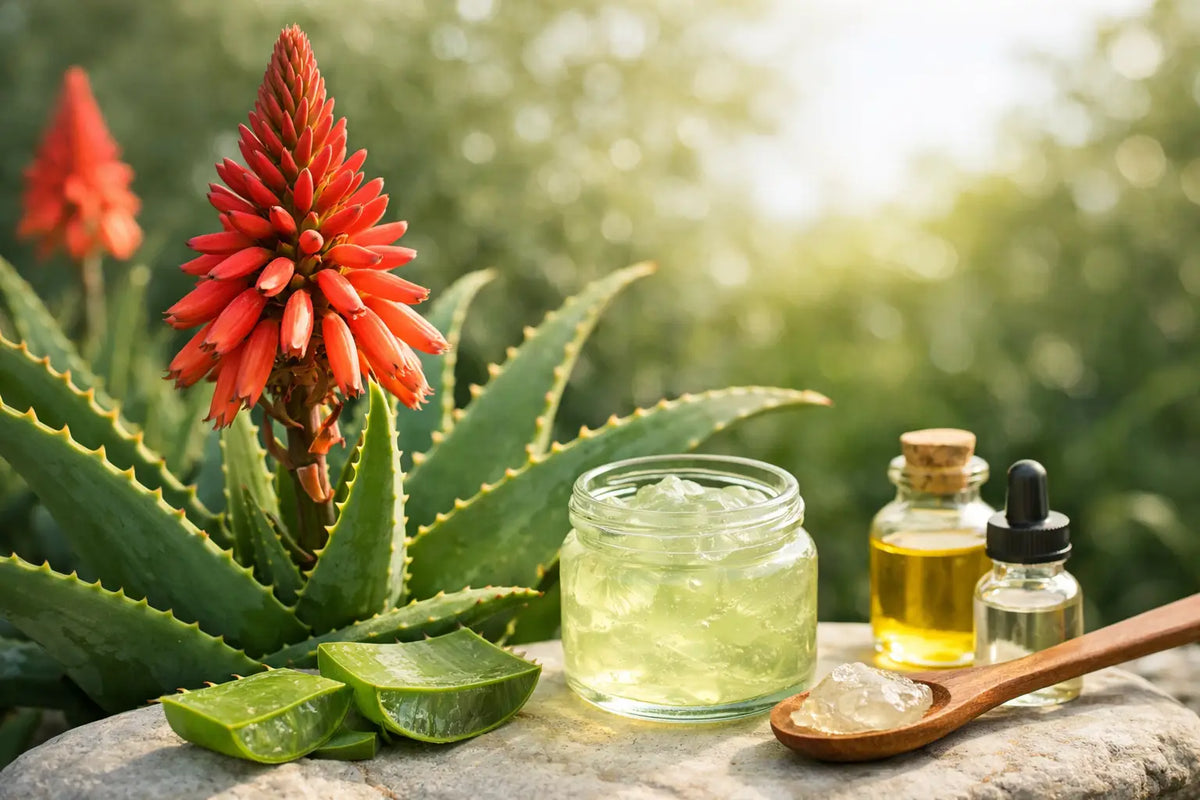
When a dog frequently scratches itself, has reddened skin, shows stiffness in movements, or goes through phases of increased digestive and immune sensitivity, many owners start looking for truly useful natural solutions. In this context, discussing the benefits of Aloe Arborescens for dogs means going beyond the current trend and understanding why this plant is chosen in targeted veterinary formulations, especially when processed to preserve its functional components.
Benefits of Aloe Arborescens for dogs: why it is so interesting
The interest in Aloe Arborescens for dogs arises from a concrete need: to offer daily support that is well tolerated, easy to use, and focused on overall well-being. We are not talking about a one-size-fits-all solution, because in veterinary medicine oversimplifications do not help. Instead, we are talking about a natural ingredient that, when included in a well-studied formulation, can support various aspects of the pet’s well-being.
The most interesting parts of aloe contain polysaccharides, antioxidant compounds, micronutrients, and plant-derived substances that have been the focus of scientific attention for their possible role in supporting the skin barrier, protecting against oxidative stress, and maintaining a balanced physiological response. Some studies on aloe vera and aloe arborescens, in human and experimental contexts, have observed soothing, film-forming, and skin repair-supporting properties. Caution remains necessary, but the rationale for use is solid when the product is formulated for a specific need.
For those who consider their dog a family member, the right question is not just whether aloe is good in general. The real question is: for which problem, in what form, and with which associated ingredients?
Where the benefits of Aloe Arborescens for dogs are truly seen
The first area where Aloe Arborescens shows its value is the skin. Redness, itching, dryness, and localized discomfort are common situations, especially during seasonal changes, after walks on irritating terrain, or in dogs prone to skin sensitivity. In these cases, aloe is appreciated for its emollient and soothing action. It helps keep the skin surface hydrated and creates a more comfortable environment in the affected area.
When aloe is combined with actives like calendula, propolis, and tea tree oil, the formula’s effect becomes more complete. Calendula is known for its gentleness on sensitive skin, propolis is often used in preparations with local protective action, while tea tree oil requires correct formulations and specific use but can be very useful for hygiene in critical areas. It is precisely this synergy logic that makes the difference between an interesting ingredient and a truly functional solution.
A second very relevant area is the paws and exposed zones. Dry pads, cracks, redness from licking or contact with hot and abrasive surfaces compromise a dog’s quality of life much more than one might think. In a formula with aloe, carrot, urea, shea butter, sweet almond oil, and vitamin E, the goal is not only to soften the skin. The aim is to nourish, protect, and help restore the skin barrier.
Then there is the issue of ears and eyes, two areas that require attention, delicacy, and specific products. Aloe, together with chamomile, cornflower, and witch hazel, can offer useful support in periocular cleansing, especially when there is a need to remove secretions and keep the area clean without irritation. In the ear area, combined with calendula, propolis, coconut oil, and tea tree oil, it contributes to effective yet gentle cleaning.
Aloe Arborescens and joints: support that must be included in the right formula
When a dog is less agile, has difficulty getting into the car, or hesitates before standing up, the problem is not age itself. The problem is joint discomfort that limits daily movement. Here, the benefits of Aloe Arborescens for dogs should not be considered alone but within the context of a complete nutraceutical formula.
Aloe Arborescens can contribute to the overall well-being of the body thanks to its profile of bioactive substances and its role in metabolic support. However, for targeted action on joints, its real value emerges when combined with ingredients such as Perna canaliculus, Boswellia serrata, Devil’s claw, Spirulina, and carrots. Perna canaliculus is well studied for joint support due to its content of glycosaminoglycans and fatty acids. Boswellia is known for supporting the normal inflammatory response, while Devil’s claw is often used in protocols supporting osteoarticular comfort.
In a well-balanced formulation, aloe does not replace these actives but accompanies them. It is a smarter and more realistic approach: not promising miracles, but supporting the dog with a combination of ingredients that work on mobility, comfort, and quality of life.
Why the processing method matters as much as the ingredient
One of the most common mistakes is thinking that just seeing the word aloe on the label guarantees the same results every time. This is not the case. The quality of the raw material, the part of the plant used, stabilization, and especially the processing method directly affect the final product profile.
Cold processing is particularly interesting because it helps preserve the most sensitive active principles. This aspect has a concrete impact in veterinary formulations, where the goal is not to include an ingredient for marketing purposes but to preserve its functional potential. When Aloe Arborescens is enhanced with a proprietary method designed to respect the raw material, the result is more consistent with the expectations of those seeking efficacy and continuity of use.
For the owner, this means something very simple: not all aloe is the same, and not all aloe-based products offer the same support.
When to choose a topical product and when oral support
It depends on the dog’s problem. If the discomfort is localized on the skin, paws, ears, or around the eyes, a topical product is usually the most logical choice. It acts where needed, with a simple and immediate routine. If instead the dog needs broader support, for example on joints or metabolism, it makes more sense to consider an oral supplement formulated for that purpose.
Consistency also changes results. A well-chosen product used sporadically often disappoints. Conversely, a correct and continuous routine allows better evaluation of the dog’s response. Obviously, there are situations that require a veterinary visit without delay, such as marked pain, extensive lesions, abundant secretions, sudden lameness, or rapid worsening.
Benefits of Aloe Arborescens for dogs and a practical approach to choosing
Those seeking a natural remedy for their dog want reassurance but also to see results. For this reason, it is best to start from the real need. If the dog has sensitive skin and reddened areas, it makes sense to choose gels, sprays, or dermofunctional treatments with aloe and soothing actives. If the problem concerns the pads, a specific cream to nourish and protect is more useful. If the dog shows joint stiffness, a nutraceutical with targeted ingredients is needed, not a generic solution.
In this journey, Aloeplus Dogs and Cats has developed formulas that clearly link the pet’s problem to the most suitable natural actives. Aloe Arborescens, combined with carrot and other selected functional ingredients, is included in products designed for specific needs: joints, ear hygiene, eye cleansing, paws, and skin well-being. This specialization makes the choice easier even for attentive but non-technical owners.
Research on botanicals in veterinary medicine is continuously evolving, and not everything has the same level of clinical evidence. But there is a clear difference between relying on improvised formulas and choosing products born from a nutraceutical and dermofunctional logic, supported by experience, clinical observation, and attention to processing quality.
If you want to do something concrete for your dog, start here: observe the real problem, choose the most suitable form of use, and focus on natural ingredients included in serious formulations. When daily well-being improves, you see it in the movements, the skin, and the way the dog feels good in its body again.