
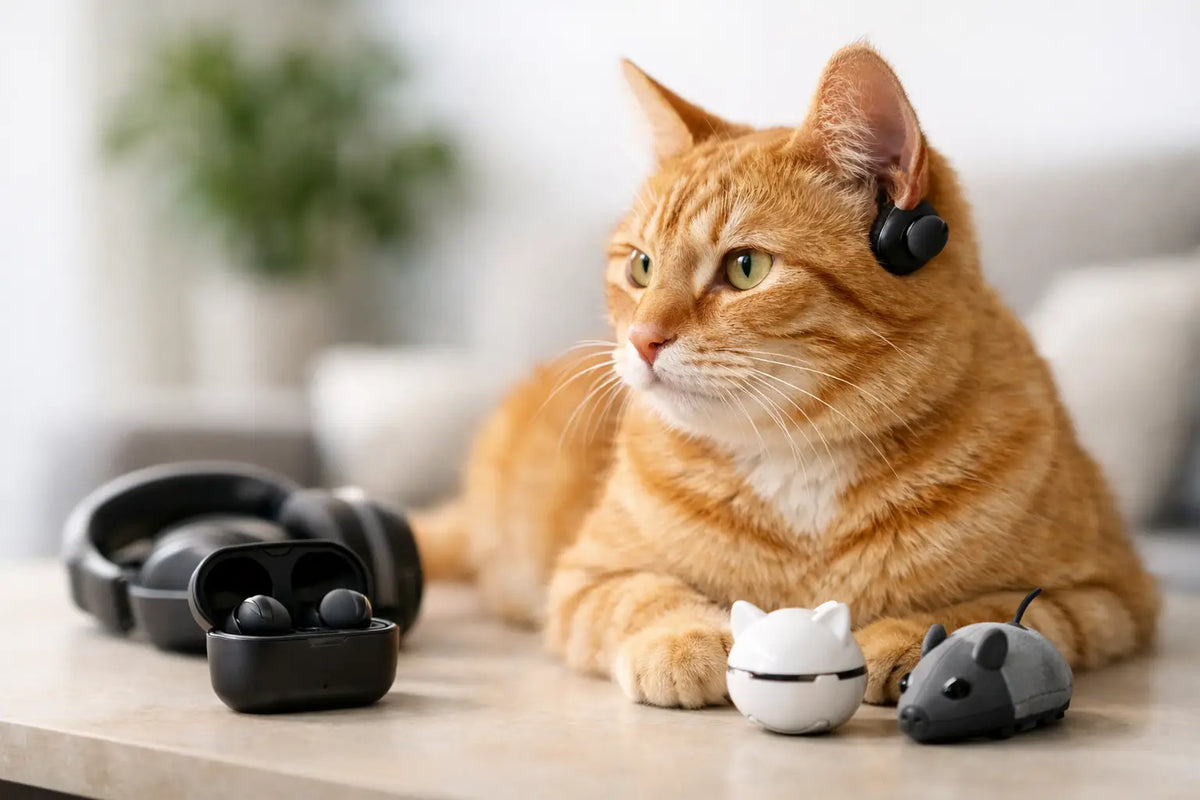
An unusual odor, a little dark earwax, or a cat that frequently shakes its head are not details to ignore. Looking for the best ear products for cats is a concrete act of care, but the right choice is not simply the most fragrant or aggressive cleaner: it must respect a delicate organ, support hygiene without masking a veterinary problem, and be manageable even with an uncooperative cat.
When a cat’s ear needs attention
A healthy ear is generally clean, free of unpleasant odors, and without abundant discharge. Small amounts of earwax can be normal, as can slight variations in the amount of dirt depending on age, lifestyle, and the shape of the ear flap. The key is to observe changes, not pursue excessive cleaning.
Persistent itching, frequent head shaking, redness, scabs, pain when touched, or dark, crumbly material may instead indicate a condition that needs assessment. The causes vary: earwax buildup, parasites such as ear mites, foreign bodies, bacterial or yeast ear infections, allergies, and skin irritation. A cleaner can support hygiene and remove surface impurities, but it does not replace a diagnosis when a problem is already underway.
This is the first criterion for making the right choice: ear products are valuable allies in a routine and for maintenance, while a cat that is in pain, has significant discharge, or has a strong odor should be examined by a veterinarian before attempting do-it-yourself remedies.
How to recognize the best ear products for cats
A good ear product should be specifically formulated for veterinary use and for the indicated species. A cat’s skin and grooming behavior require caution: anything applied near the ear flap may be licked, and seemingly common substances may be unsuitable if incorrectly dosed or used out of context.
The formula matters more than a generic promise. A cleaner intended for everyday hygiene should clean gently, help keep the outer ear flap in good condition, and leave no sticky residue. It is useful to choose products with clear instructions on quantity, frequency, and method of use, without harsh alcohol or unnecessary fragrances that could bother the cat.
Practicality also deserves attention. A bottle that allows controlled application helps avoid waste and overly lengthy handling. The cat should not experience cleaning as a struggle: a simple procedure, carried out calmly and in just a few minutes, makes it easier to maintain consistency.
Finally, beware of universal solutions. Antibiotic, antifungal, or antiparasitic drops should be used only on veterinary advice. Using a therapeutic product without knowing whether the eardrum is intact or what is causing the problem may delay the correct treatment.
The value of natural ingredients when they are well formulated
When choosing an ear cleaner, plant extracts can offer interesting support when included in a formula designed for animals. Aloe is valued for its emollient and soothing properties for the skin; calendula has traditionally been used in topical products for the comfort of sensitive skin; propolis is being studied in laboratory research for its activity against certain microorganisms.
However, these characteristics do not justify the direct use of tinctures, essential oils, or homemade mixtures in the ear canal. Research on natural substances does not automatically mean safety and effectiveness for every cat, concentration, or application site. Essential oils in particular require great caution in cats: they must never be improvised, ingested, or applied undiluted.
The difference lies in a complete veterinary formula, with controlled dosages, precise directions for use, and ingredients selected to work together. This is the principle behind Otorì ear cleaner by Aloeplus Cani e Gatti: aloe, calendula, propolis, coconut oil, and tea tree oil in a formula intended for ear hygiene. Aloe and calendula help make the cleaning process gentler on the skin, while the other components complete a functional approach to removing impurities. Use exclusively according to the label, avoiding contact with the eyes and mouth and without combining it with homemade products.
Cleaner, medication, or antiparasitic: they are not the same thing
One of the most common mistakes is calling any dirty ear “otitis.” In reality, a cleaner is a hygiene solution: it can help remove earwax and contribute to keeping the outer ear flap clean. A medicated product, on the other hand, acts on a specific cause identified by the veterinarian. An antiparasitic works against specific parasites, but it is not automatically the answer to itching and earwax.
This distinction protects the cat and makes every intervention more effective. If the veterinarian prescribes a local treatment, they can advise whether and when to combine it with a cleaner, because in some cases preliminary cleaning helps ensure proper application of the medication. In other cases, handling an inflamed ear too much may increase discomfort.
How to clean a cat’s ears without stressing it
Cleaning should focus on the visible part of the ear. Do not insert cotton swabs into the canal: they can push material deeper, irritate the tissues, or cause injury. Instead, keep a soft gauze pad and the chosen product close at hand.
Apply the amount indicated on the label, gently massage the base of the ear for a few seconds, and let the cat shake its head. This natural movement brings some of the impurities toward the outside. Then remove only what is visible with clean gauze, without forcing anything or trying to reach deep areas.
For a wary cat, choose a quiet moment and pair the routine with a favorite reward. Two short, calm attempts are better than one long, stressful session. The frequency depends on the individual animal: some cats do not need regular cleaning, while others may benefit from periodic maintenance recommended by the veterinarian.
Signs that require a veterinarian
Do not wait for the problem to worsen if the cat holds its head tilted, loses its balance, reacts in pain, scratches itself until it is injured, or has blood, pus, obvious swelling, or a persistent unpleasant odor. Black discharge resembling coffee grounds also deserves attention, as it may be consistent with ear mites but does not allow a certain diagnosis from a distance.
A veterinary examination is also essential when symptoms return frequently. Recurrences may be caused by allergies, skin disorders, unresolved parasites, or infections requiring targeted treatment. Cleaning without identifying the cause may provide temporary improvement but will not resolve the cat’s discomfort.
A useful choice starts with observation
Among the best ear products for cats, the most suitable is the one that matches the animal’s actual condition: gentle and functional for maintenance hygiene, and specific and recommended by a veterinarian when a medical condition is present. Check the ears regularly, follow the product’s instructions, and do not underestimate sudden changes. A gentle action performed at the right time can preserve your cat’s comfort, trust, and peace of mind in everyday life.