
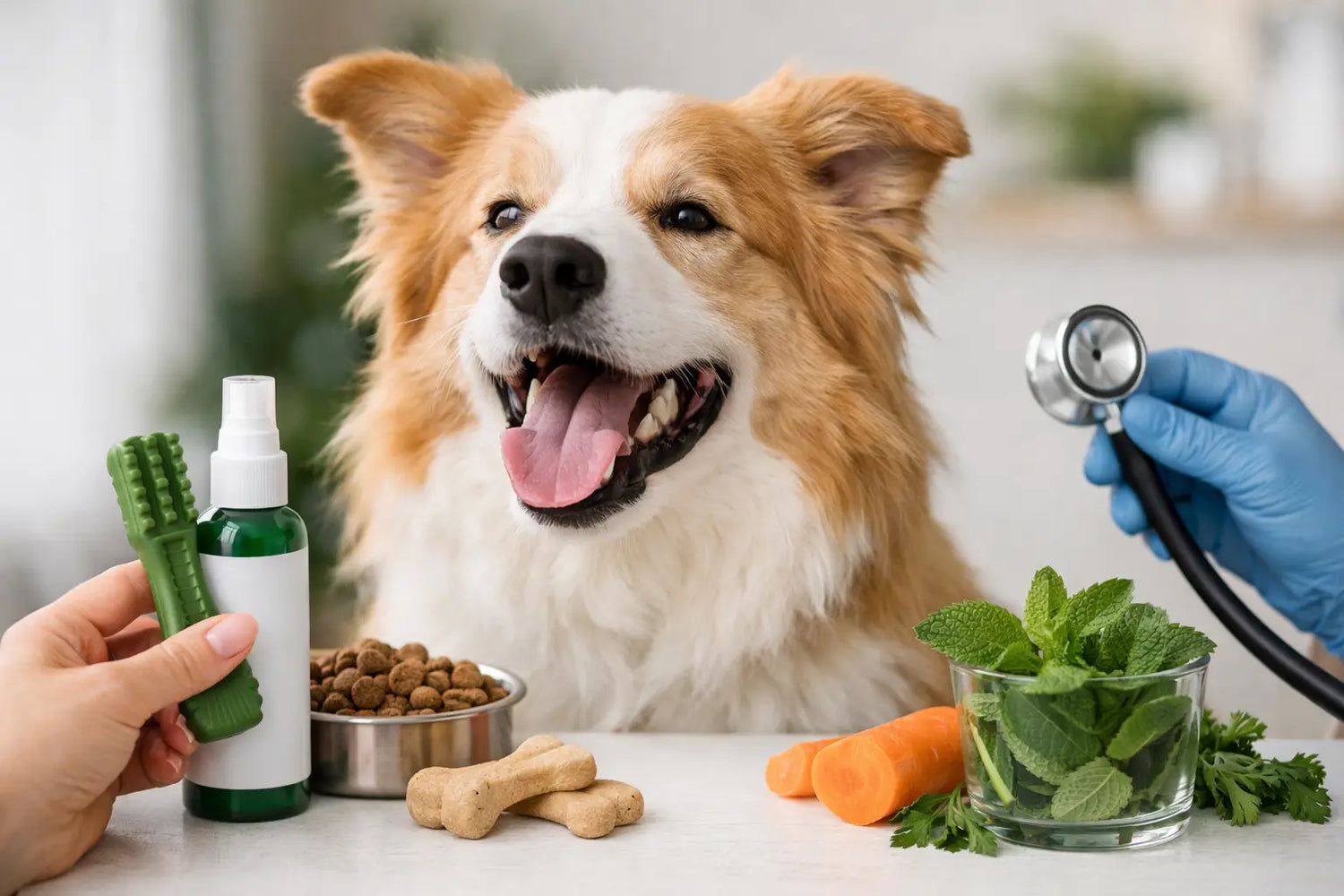
If your dog comes to you for a cuddle and your first instinct is to turn your head, you are not overreacting. Looking for the best solutions for dog breath is not just an aesthetic issue: very often, bad breath is the first sign of an oral, digestive, or metabolic problem that deserves attention.
Bad breath should not be treated as a simple “characteristic” of the dog. An occasional odor, after a meal or after chewing something, can be normal. However, consistently unpleasant breath often accompanies plaque buildup, tartar, gum inflammation, changes in the oral microbiota, or, in some cases, deeper disorders. The key is to observe the context and intervene early.
Best solutions for dog breath: understanding the cause first
When it comes to bad breath in dogs, the temptation is to mask the odor. This is the least helpful approach. The best solutions for dog breath are those that address the real cause, not those that just freshen breath for a few minutes.
In most cases, the problem starts in the mouth. Bacterial plaque deposits on the teeth, mineralizes into tartar, and creates an environment favorable to bacteria that produce volatile sulfur compounds, which are among the main causes of unpleasant odor. Veterinary literature considers periodontal disease one of the most common conditions in adult dogs, especially in small breeds and predisposed individuals.
There are also situations where the breath changes in quality. A sweet or fruity smell may suggest metabolic problems, while an ammonia-like odor can appear with kidney issues. For this reason, if bad breath is sudden, intense, or accompanied by increased thirst, loss of appetite, gum bleeding, or difficulty eating, a veterinary evaluation is needed without delay.
Signs that should not be ignored
Bad odor rarely comes alone. It is often accompanied by red gums, thicker saliva, visible tartar, chewing on only one side, discomfort when touching the muzzle, or reduced interest in kibble or hard snacks. In other cases, the dog continues to eat but does so with silent pain, which the owner notices late.
This point is very important: dogs tend to compensate. Even when their mouth hurts, they can continue their routine almost normally. That’s why daily prevention is worth more than late intervention.
Oral hygiene: the most effective foundation
If you are looking for a serious solution, oral hygiene remains the cornerstone. Brushing your dog’s teeth regularly is still the most effective method to reduce plaque formation. It is not always easy, especially with older, wary dogs or those not accustomed from a young age. But even a gradual, well-planned, and consistent cleaning offers concrete results.
Consistency is more important than perfection. Two or three well-done cleanings each week are already better than sporadic interventions. Alongside brushing, specific chew treats or supports can help, provided they are chosen according to the dog’s age, dentition, and sensitivity. Not all are suitable for every dog: for example, a dog with inflamed gums or loose teeth does not benefit from very hard textures.
However, when tartar is already abundant, home care is not enough. In these cases, professional tartar removal by a veterinarian is often the most appropriate step. This point must be made clear: no serious product can replace professional cleaning when deposits are already consolidated below the gum line.
Diet, digestion, and breath: the connection exists
Not all bad breath originates from the teeth. A poorly digestible diet, frequent food changes, ingestion of unsuitable food, or slowed digestion can affect mouth odor. Habits also matter: some dogs eat too quickly, others ingest material from the ground, and others have particular gastrointestinal sensitivity.
Balance is needed here. It makes no sense to attribute every bad breath to the stomach, but neither should the role of the digestive system be ignored when the mouth shows no significant alterations during a veterinary exam. In these cases, work should focus on quality nutrition, intestinal regularity, and targeted functional support.
The value of natural supports in daily routine
For many owners, the difficulty is not recognizing the problem exists. It is finding a solution that is practical, well tolerated, and sustainable over time. This is where well-formulated natural supports can make a difference, especially when designed for oral well-being and not just to mask odor.
Ingredients like Aloe Arborescens and carrot play an interesting role in this context. Aloe is studied for its soothing, film-forming properties and support for delicate tissues, while carrot naturally provides antioxidant components useful for maintaining the physiological health of mucous membranes. In the oral field, the goal is not to “perfume” the mouth but to promote a cleaner, more balanced environment less prone to irritation and bacterial growth.
Peppermint, when included in appropriate veterinary formulations, can also contribute to a local feeling of freshness. But alone, it is not enough. The central point remains the synergy between cleansing action, mucosal protection, and attention to underlying causes.
When the best solution is local and targeted
In daily practice, many cases of bad breath benefit from localized oral support. A specific gel for the oral cavity can adhere better to tissues than overly liquid or quickly passing solutions, prolonging contact with gums and oral mucosa.
In a truly functional approach, a formulation with Aloe and carrot can help soothe irritated mouths, support the physiological integrity of tissues, and make hygiene routines more manageable. If inflammation is present, the dog tends to resist handling more easily. A gentle but effective support can improve acceptance and encourage continuity.
A product like Dermogel fits well into this picture, formulated with Aloe, carrot, and peppermint. Aloe supports oral mucosa well-being, carrot contributes its antioxidant component, and peppermint helps improve local pleasantness. It is neither a shortcut nor a miracle promise: it is an intelligent support in the daily management of bad breath when the problem arises from a sensitive mouth, insufficient hygiene, or local irritation.
What research says about active ingredients
Scientific interest in Aloe vera and Aloe arborescens for skin and mucous membrane applications arises from their soothing, moisturizing properties and potential support in tissue repair processes. In dentistry and periodontology, several studies have evaluated Aloe-based gels and mouthwashes for plaque control and gum inflammation, showing promising results as a complement to mechanical hygiene, though with differences among formulations and protocols.
This is the key point to remember: natural actives work best as part of a complete strategy. They do not replace diagnosis, professional cleaning, or veterinary management of complex cases. But they can greatly improve routine quality and help owners intervene before the problem worsens.
The most common mistakes when a dog has bad breath
The first mistake is waiting too long. The second is using improvised remedies meant for people or products not formulated for pets. The third is confusing an improvement in odor with solving the problem.
There is another aspect not to underestimate: frequency. If you apply a product only when the odor becomes unbearable, you are unlikely to achieve a stable result. A dog’s breath truly improves when the mouth enters a regular, gentle, and specific care routine.
How to choose among the best solutions for dog breath
The right choice depends on the dog’s actual condition. If there is obvious tartar and inflamed gums, the first step is veterinary care. If the problem is initial or tends to recur after cleaning, then it makes sense to build a routine with mechanical hygiene, diet control, and natural local support.
It is best to prefer formulations developed for veterinary use, with recognizable ingredients and a clear functional logic. An endless list of actives is not needed. What is needed is a coherent composition, well tolerated and easy to use daily. Practicality matters a lot because the best product is the one you can really use consistently.
For those seeking a concrete, specialized response focused on daily oral well-being, Aloeplus Dogs and Cats offers an approach that combines naturalness, functional formulation, and veterinary attention. It is the kind of solution that makes sense when you want to care for your dog’s mouth before bad breath becomes a sign of a more serious problem.
A dog’s breath changes when the condition of its mouth changes. And often, just paying closer attention to that signal is enough to make a simple but decisive choice: don’t mask the odor, take care of the cause.