
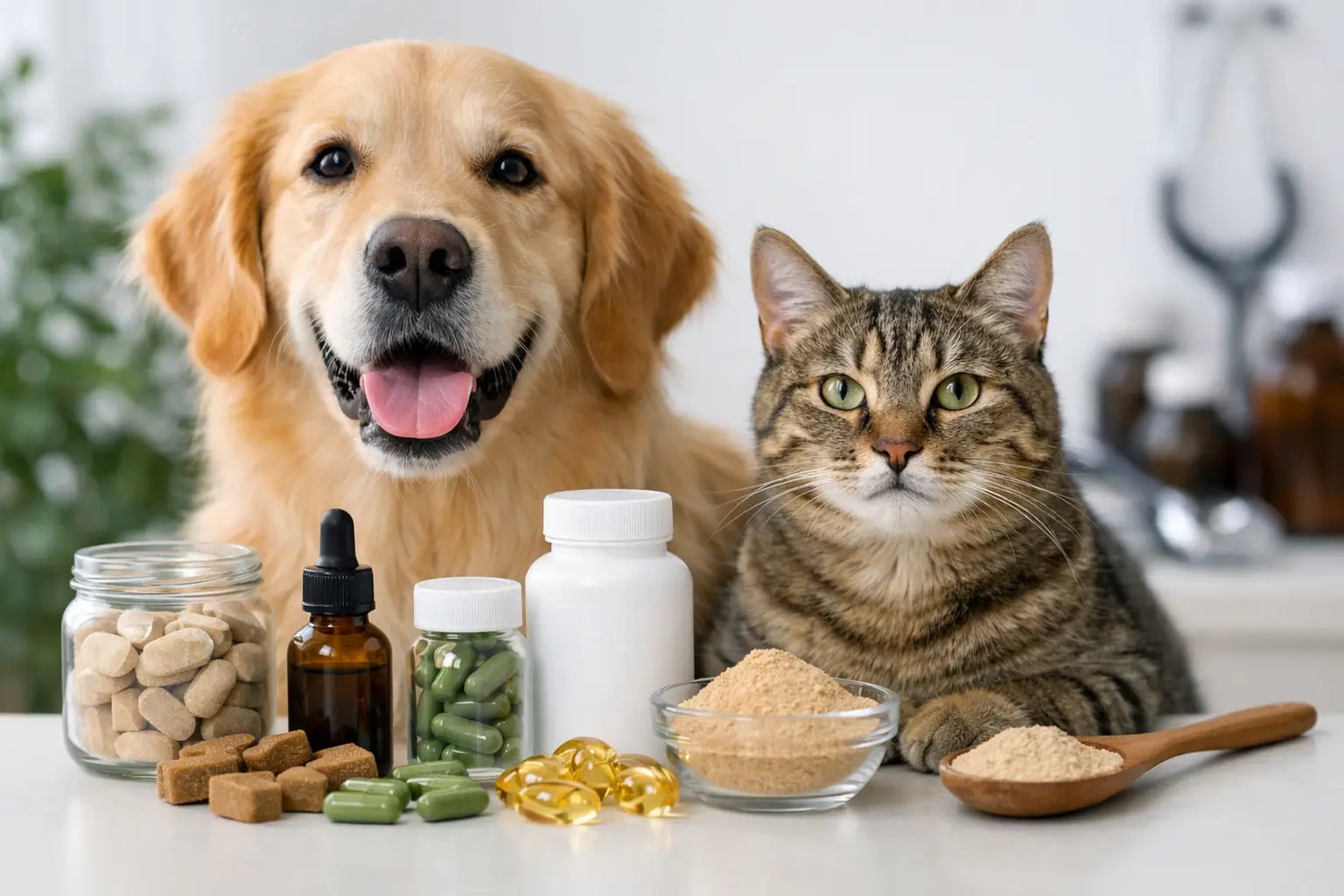
When a dog keeps licking the same paw, a cat has dirty ears with a bad odor, or an elderly animal struggles to get up after resting, the question is not just which product to use. The real question is how to choose a support that is targeted, safe, and consistent with the problem. This guide to veterinary nutraceuticals starts from here: to help you understand when a functional ingredient can make a difference in the daily well-being of dogs and cats.
Guide to veterinary nutraceuticals: what they really are
The term nutraceutical combines nutrition and function. In veterinary medicine, it refers to products formulated with natural or naturally derived substances that, if well selected and properly dosed, can support specific body functions. They do not replace the diagnosis of the veterinarian and should not be considered a shortcut. However, they are a concrete ally in mild conditions, maintenance, and support plans.
For a careful owner, the difference between a generic supplement and a veterinary nutraceutical lies in the purpose. It is not enough to read "natural" on the label. You need to understand which need the product addresses, which active ingredients it contains, how they are processed, and if the formula is truly designed for the dog or the cat.
Here comes a point often underestimated: the quality of the raw material and the production process. Ingredients that look interesting on paper can lose value if poorly treated. Conversely, a process designed to preserve active principles makes the formula more consistent with its promise of effectiveness.
When nutraceuticals make sense
Not all problems require the same approach. A dog with joint stiffness, a cat with sensitive skin, or an animal with a liver under metabolic stress have very different needs. Nutraceuticals make sense when there is a specific goal: supporting joints, protecting liver function, promoting the skin barrier, keeping ears and eyes clean, or helping the skin in the most exposed areas.
The advantage lies in continuity. Many pet disorders are not resolved with occasional intervention but with a well-structured routine. Think of the ears of a dog prone to wax buildup or a cracked paw pad that irritates every time the dog walks on rough surfaces. In these cases, the right product does not just address the immediate discomfort but helps manage the problem over time.
The downside is that not all animals respond the same way. Age, lifestyle, diet, concurrent diseases, and the owner's adherence to the routine make a difference. For this reason, a thoughtful choice is always necessary, not an impulsive one.
How to read a formula without stopping at marketing
A good guide to veterinary nutraceuticals must teach you to look beyond the packaging. The first criterion is consistency between need and ingredients. If the problem is joint-related, active ingredients with antioxidant, soothing, and movement-supporting logic are needed. If the focus is the liver, the formula must be oriented towards substances known for liver and metabolic support.
The second criterion is synergy. A well-constructed formula does not randomly combine ingredients. It combines actives that work on multiple fronts of the same problem. A clear example is the combination of aloe and carrot in formulations dedicated to the skin or exposed tissues. Aloe arborescens is appreciated for its soothing and protective properties, while carrot provides compounds naturally rich in antioxidants useful for skin nourishment.
The third criterion is tolerability. A product can be effective but impractical or poorly tolerated by that specific animal. In real life, effectiveness also depends on ease of administration and consistent use.
Joints: the right support changes quality of life
With age, overweight, or after periods of intense activity, many dogs show stiffness, hesitation in jumping, or less desire to move. Even cats, though quieter in signaling, can suffer from joint discomfort. In these cases, the nutraceutical does not work miracles but can become a valuable part of the support plan.
Ingredients like Perna canaliculus, Boswellia serrata, devil’s claw, and spirulina are often chosen for their role in joint comfort and movement support. Veterinary and comparative literature has observed, in various contexts, the potential of some of these actives to modulate inflammatory processes and support joint function. Boswellia, for example, is studied for its boswellic acids, while the green-lipped mussel Perna canaliculus is known for components beneficial to joint health.
In a formula like Artricur pet, these ingredients are combined with aloe arborescens, black carrot, beetroot, and orange carrot. The result is a more complete support: not only joints but also antioxidant protection and general tissue support. It is a sensible choice when the dog or cat needs continuity, especially during seasonal changes or in old age.
Liver and metabolism: support not to be postponed
The liver works silently. For this reason, its fatigue is often noticed late or only when the veterinarian reports altered values or the need for targeted nutritional support. In animals undergoing therapies, with suboptimal diets, or periods of metabolic stress, a well-formulated hepatic nutraceutical can be a concrete help.
Milk thistle standardized in silymarin is one of the best-known ingredients in this area. Silymarin is the subject of scientific interest for its antioxidant profile and support of liver function. Alongside this, betaine, B vitamins, zinc picolinate, and resveratrol can contribute to energy metabolism and cellular protection.
A formula like Epapet follows this logic. It does not rely on a single symbolic active but builds broader support for liver function. It is the type of product that makes sense when there is a real need for support, always in consultation with the attending veterinarian.
Ears, eyes, and skin: nutraceuticals meet dermofunctionality
Many owners seek natural solutions for recurring but localized problems: dirty ears, eyes with discharge, reddened skin, areas prone to licking, or dry paw pads. Here the boundary between nutraceutical and dermofunctional becomes very useful because the animal’s well-being also depends on well-designed topical products.
For ears, aloe, calendula, propolis, coconut oil, and tea tree oil form an interesting combination when the goal is to cleanse, soothe, and keep the ear environment cleaner. Otorì ear cleanser meets this daily need well, especially in subjects prone to buildup and bad odor.
For eyes, a formula with aloe, chamomile, cornflower, and witch hazel can help with gentle cleansing of the periocular area. Oftocur is designed precisely for frequent but non-aggressive cleaning, useful when tearing and residues become a recurring problem.
For skin and paws, the choice of actives once again makes the difference. Aloe, carrot, urea, shea butter, sweet almond oil, and vitamin E are functional ingredients when the skin appears dry, thickened, or stressed. Zampet works in this direction, offering protection and softness in the most exposed areas. If the focus is a skin area to soothe and refresh, the aloe, carrot, and peppermint mix in Dermogel can be a practical support. For a spray action, with aloe, calendula, propolis, and tea tree oil, Dermospray offers a quick solution in daily skin hygiene routines.
Why natural origin alone is not enough
Natural does not automatically mean effective. And it does not always mean suitable for everyone. Some animals have more reactive skin, others tolerate certain flavors less, and others have clinical conditions requiring special attention. The choice must therefore be based on the quality of the actives, the specificity of the formula, and the presence of a technical rationale.
From this point of view, veterinary specialization and the processing method matter a lot. A patented formula based on Aloe Arborescens and carrot, enhanced by a cold processing method like the HDR method, has a clear positioning: to preserve the active principles of raw materials as much as possible and translate naturalness into concrete effectiveness. It is an approach that especially speaks to owners who do not want to improvise with home remedies but seek a product truly designed for the pet.
How to choose well for your dog or cat
The best choice starts from the real problem, not the product category. If your dog limps after walks, joint support is needed. If the cat has frequent eye discharge, the priority is targeted and gentle cleansing. If the animal has dry or reddened skin, protective and soothing actives should be sought, not generic formulas.
The second step is to observe the consistency of the problem. An occasional discomfort may require simple management. A recurring problem deserves a more precise routine and often professional support. The third step is to evaluate the composition with a practical eye: recognizable ingredients, clear function, specific intended use.
When a formula combines veterinary expertise, carefully chosen natural actives, and processing aimed at preserving their value, the difference is seen in daily use. And it is precisely there that the owner finds what matters most: a calmer animal, more comfortable in movement, better protected in its everyday vulnerabilities.
The most useful rule remains this: do not look for the product that promises everything; look for the one that responds well to that specific need your dog or cat is showing you today.