
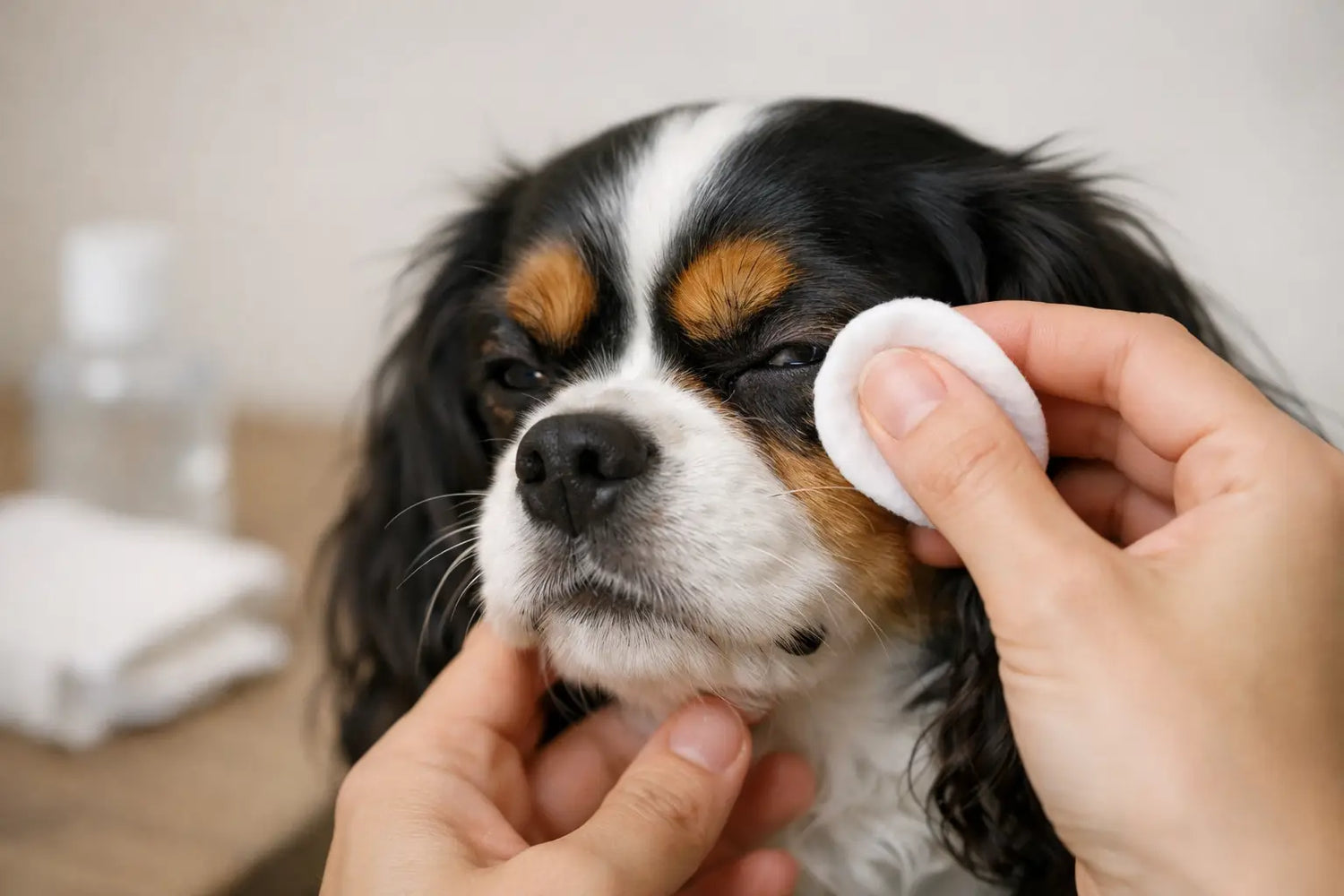
If you are wondering how to clean a dog's eye contour, the first thing to know is this: the periocular area is delicate, it irritates easily, and should not be treated carelessly. A bit of tearing can be normal, but when crusts, brownish halos, secretions, or obvious discomfort appear, a properly done daily cleaning can really make a difference.
How to properly clean a dog's eye contour
Cleaning a dog's eye contour does not mean washing the eye. It means gently cleansing the hair and skin around the eyelid margin, removing tear residues, dust, and secretions that, if left there, tend to dry and further irritate the area.
The correct method is simple but requires precision. You need a sterile gauze or a soft pad well soaked with a specific ocular cleansing solution for dogs. The movement should go from the inner corner outward, without rubbing. If there is a lot of dry material, do not scrape it off: it should first be softened with the solution, letting it act for a few seconds.
This point matters more than it seems. Many rednesses worsen precisely because of insistence with dry tissues, cotton that leaves fibers, or unsuitable cleansers. The dog's eye does not need harsh products but soothing substances that are well tolerated and designed for periocular use.
What you really need for cleaning
In daily practice, a few tools are enough, as long as they are the right ones. Sterile gauze is preferable to regular cotton, which can leave fibers. The solution must be specific for veterinary ocular cleansing, preferably formulated with plant-based actives known for their soothing and decongestant action.
Ingredients like aloe, chamomile, cornflower, and witch hazel are particularly useful in this area. Aloe is appreciated for its hydrating and soothing action on sensitive skin. Chamomile is traditionally used to calm redness and discomfort. Cornflower is known for its refreshing and gentle effect, while witch hazel helps keep the skin clean and in good condition. When these ingredients are included in an ocular cleanser formulated for dogs, cleaning becomes not only safer but also more effective in reducing daily discomfort.
When a dog's eye contour gets dirtier
Not all dogs have the same needs. Some hardly need it, others require frequent cleaning. It depends on the shape of the muzzle, the quality of the hair, the presence of skin folds, the type of tearing, and even the environment.
Brachycephalic breeds, such as those with short muzzles, tend to have more exposed eyes and often more tearing. Light-colored dogs show tear oxidation halos more clearly. Long-haired dogs accumulate dirt more easily because the hair around the eyes retains moisture and secretions. Dust, wind, pollen, and household cleaners can also contribute to worsening the situation.
Here an honest distinction is needed. If the dog only has light and sporadic tearing, regular cleaning may be enough. But if dense, yellowish or greenish secretions appear, if the dog keeps the eye closed, scratches often, or shows pain, it is no longer just hygiene but a possible clinical problem that should be evaluated by a veterinarian.
Signs not to underestimate
A slightly moist eye contour in the morning is not automatically alarming. It is different if the skin appears red, foul-smelling, or with persistent crusts. Even a very marked brown coloration can indicate continuous tearing that needs to be understood in its cause, not just managed symptomatically.
Causes can vary: conjunctivitis, irritation from foreign bodies, allergies, mispositioned eyelashes, tear duct obstruction, eyelid alterations. That is why cleaning is a useful support but does not replace diagnosis when something is wrong.
The most common mistakes when cleaning the eye contour
The first mistake is using human products. Micellar water, scented wipes, homemade chamomile, or non-specific cleansers can alter a very sensitive area. Even seemingly harmless home remedies are not always well tolerated, especially if the preparation is not sterile or contains irritating residues.
The second mistake is cleaning too vigorously. Rubbing to immediately remove crusts often irritates the skin and can cause microtraumas. The third is neglecting frequency: letting secretions accumulate for days makes cleaning more difficult and less comfortable for the dog.
There is also an often underestimated aspect: using the same gauze for both eyes. It is better to use one gauze per eye, especially if one appears dirtier or redder. It is a simple but useful precaution.
How to clean a dog's eye contour every day
The best routine is short, gentle, and consistent. Moisten the gauze well with the ocular cleanser, place it for a few seconds on the area to be cleaned, then remove the dirt with a single light pass from the inside outward. If necessary, repeat with a new gauze.
When the periocular hair is very long, it can be helpful to keep it tidy, but without improvising as groomers in such a sensitive area. In some cases, a trim done by experienced hands helps reduce tear and dirt buildup.
The frequency depends on the dog. For some, two or three times a week is enough; for others, daily cleansing is better. The practical rule is to observe the area: if it tends to get dirty every day, it is best to intervene daily before deposits form that are harder to remove.
The role of a soothing ocular cleanser
When cleansing is entrusted to a specific formula, it makes a big difference. A veterinary-use product with aloe, chamomile, cornflower, and witch hazel helps cleanse without aggression, refresh the area, and keep the eye contour cleaner over time. It is a sensible approach especially for dogs prone to frequent tearing or irritation from rubbing.
In this context, a solution like Oftocur meets the practical need of those who want to clean the periocular area effectively and gently. The presence of aloe contributes to skin comfort, while chamomile, cornflower, and witch hazel support a soothing and decongestant action useful in daily routine. This is not a cosmetic detail: when the product is designed for that specific area, the risk of doing more harm than good is reduced.
Even scientifically, interest in these actives is not accidental. Aloe vera has been studied for its film-forming, hydrating, and soothing properties on epithelial surfaces. Witch hazel is traditionally used for its gentle astringent action, while extracts like chamomile and cornflower are included in ophthalmic and dermocosmetic formulations precisely for their good tolerance in sensitive areas. Naturally, the quality of the formulation, the purity of the extracts, and correct use always matter.
When cleaning is not enough
Being practical means saying it clearly: not everything is solved with gauze and a good cleanser. If the dog tears continuously from one eye, if the eye contour is swollen, if there are abnormal secretions, or if you notice corneal opacity, a veterinary visit is needed.
The same applies if the problem recurs despite a well-done routine. In that case, the underlying cause must be understood. Sometimes it is a simple environmental irritation, other times an anatomical alteration or an inflammatory condition requiring specific treatment.
Daily cleaning remains an important ally. It reduces the accumulation of irritating material, improves the dog's comfort, and also helps you notice suspicious changes earlier. Those who truly consider their animal a family member know that prevention often comes from small, repeated, and well-done actions.
A good habit that truly protects
The eye contour should not be cleaned only when "it looks dirty." It should be managed regularly, especially in predisposed dogs, because a well-cleaned periocular area is less exposed to irritation, bad odor, persistent stains, and daily discomfort. The difference is made by the gentleness of the gesture and the quality of what you use.
Choosing a specific ocular cleansing product with functional and well-tolerated natural ingredients means turning an often uncomfortable operation into a true wellness routine. And when your dog lets you clean without discomfort, with cleaner eyes and less reddened contours, you immediately understand you are going in the right direction.