
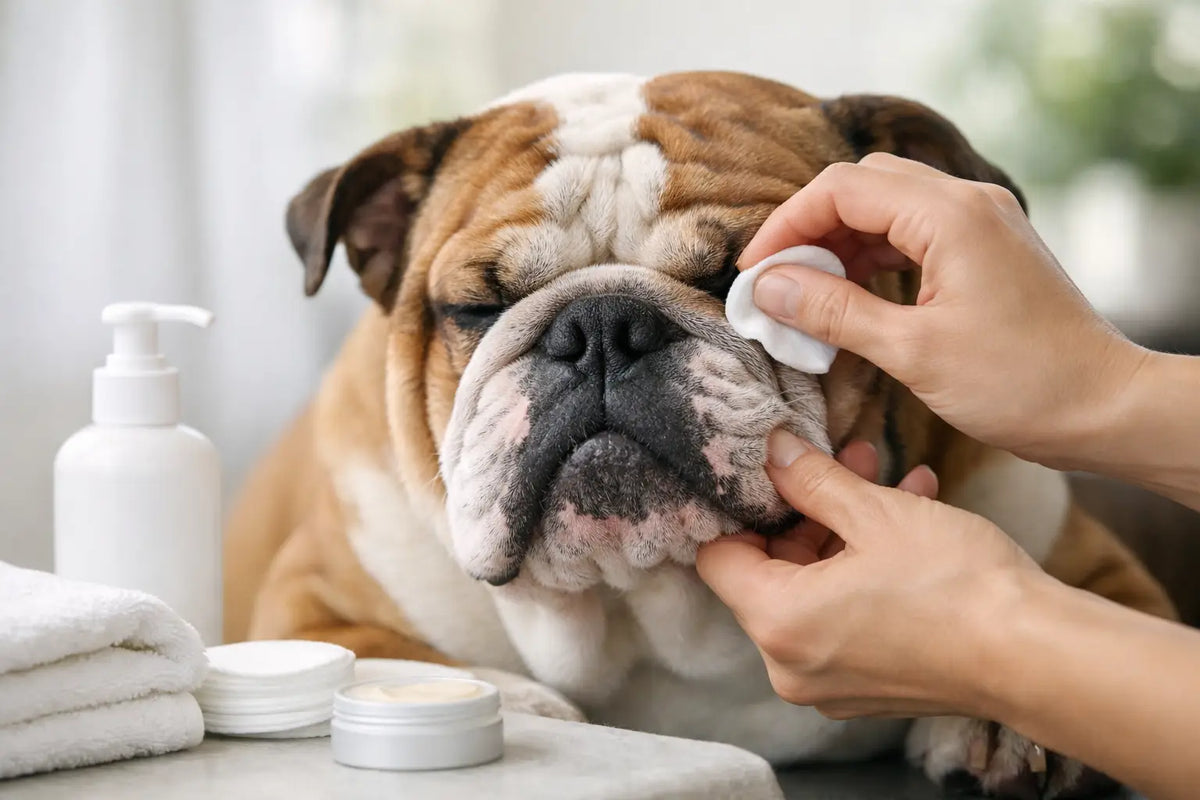
That typical intense odor between the facial folds should not be ignored. If you are looking for an effective way to clean bulldog folds, the first goal is not to make them look clean for a few hours: it is to gently remove moisture, secretions, and residue that can become trapped in the skin. A short, properly performed routine helps protect a naturally delicate area without stressing the dog or further irritating the tissues.
English Bulldogs, French Bulldogs, Pugs, and other brachycephalic breeds have deep, closely spaced skin folds. They are adorable, but their very structure creates small, poorly ventilated areas where heat and moisture persist for longer. This is where daily prevention makes a real difference.
Why bulldog folds can become irritated
Tears, saliva, dust, food residue, and sebum can easily accumulate in facial folds. When the hair and skin remain wet, the environment becomes favorable for the proliferation of microorganisms normally found on the skin. The result may be a bad odor, dark discoloration of the hair, itching, redness, or a sticky discharge.
Not all folds require the same level of attention. A bulldog that tears excessively, eats enthusiastically and leaves residue on its muzzle, or spends a lot of time outdoors may need more frequent checks. Summer heat, humidity, and a predisposition to skin allergies can also make this area more reactive.
A fold is not a wound to treat on your own with harsh products. It is thin skin that is often already subject to friction. Alcohol, strong fragrances, human-use wipes, and household cleaners can alter the skin's hydrolipidic film and increase discomfort. If the problem keeps coming back, the cause should be investigated with your veterinarian rather than simply masking the odor.
How to clean bulldog folds, step by step
Choose a calm moment, perhaps after the evening walk or after meals. The goal is to turn checking the muzzle into a predictable, positive action: a few minutes, a calm voice, and a reward at the end. If the dog becomes agitated, do not force it. It is better to gradually accustom it to having its cheeks and muzzle touched.
1. Observe before cleaning
Gently open each fold with clean fingers and carefully examine the skin. Pale pink, dry skin without a pungent odor is a good sign. Instead, note whether there is pronounced redness, persistent moisture, crusts, small cracks, swelling, or yellowish material.
This observation is just as important as the cleaning itself: it makes it possible to notice a change while it is still mild. Do not rub sore areas or remove firmly attached crusts.
2. Clean with a soft material and a suitable product
Use sterile gauze or a very soft pad, avoiding cotton that leaves fibers behind. Moisten it with a dermofunctional cleanser specifically for dogs, then pass it through the fold with a light movement from the inside outward. Use a clean section of gauze for each fold so that you do not transfer residue from one area to another.
A formulation designed for animal skin is preferable to improvised solutions. Aloe can help provide comfort and hydration to stressed skin, while calendula and propolis are valued ingredients in dermocosmetics for their soothing and balancing action. Tea tree oil, if present, should always be used exclusively in veterinary products formulated and dosed for dogs: never apply pure essential oils to the folds or near the eyes.
Dermospray Aloeplus Dogs and Cats combines aloe, calendula, propolis, and tea tree oil in a dermofunctional formula designed to support localized skin hygiene. It can be a practical solution when folds tend to get dirty, give off an unpleasant odor, or appear easily irritated. Spray the product onto the gauze, not directly toward the eyes, nostrils, or mouth, then gently pat the area, following the instructions on the label.
3. Always dry without rubbing
The most underestimated step is drying. After cleansing, use clean, dry gauze to pat each wrinkle until all residual moisture has been removed. There is no need to rub: gentle pressure absorbs the water without creating friction.
Leaving the fold damp, even after cleaning it well, partly defeats the work you have done. If the bulldog has a very wrinkled muzzle, take a few extra seconds to reach the less visible creases as well.
How often should you clean the folds?
For many bulldogs, a daily check is useful, especially of the nasal folds and areas near the eyes. Thorough cleansing may be performed daily or as needed, depending on the amount of discharge, the climate, and individual sensitivity. A dog with healthy, dry skin may need only light cleaning every other day; a dog with excessive tearing may require daily attention.
More does not mean better. Cleaning too often with unsuitable products or applying too much mechanical pressure can make the skin more fragile. The right routine is the one that keeps the area clean, dry, and comfortable without causing redness after handling.
After meals, quickly check that no residue remains between the lip folds. After a rainy day or a walk in the mud, dry the muzzle as soon as you return home. These small actions reduce buildup before it becomes a problem.
When cleaning is not enough: signs that should be assessed by a veterinarian
Slight hair discoloration caused by tears does not always indicate a medical condition. However, some signs require veterinary assessment because they could indicate fold dermatitis, an infection, an allergy, or an eye problem that needs to be addressed at the source.
Contact your veterinarian if you notice pain when touching the muzzle, a strong odor that returns immediately after cleaning, intense redness, bleeding, pus, swelling, persistent itching, or rubbing of the muzzle against the floor or furniture. A change in tearing, partially closed eyes, or thick eye discharge also warrants prompt attention.
The professional can determine whether specific tests, targeted treatment, or changes to daily care are needed. Avoid applying leftover antibiotic, antifungal, or corticosteroid creams from previous prescriptions: an inflamed fold can have different causes, and the right treatment depends on the diagnosis.
Small habits that help keep the muzzle healthier
Cleaning works best when it is part of consistent overall care. Keep bowls clean, choose food and treats that do not leave sticky residue on the muzzle, and monitor the dog's weight: in overweight dogs, folds can become deeper and less well ventilated. During the warmer months, provide cool, dry environments because panting and frequent drinking increase moisture around the mouth and nose.
Also remember to keep fold hygiene separate from eye care. For the eye area, always use different gauze and products formulated for that area, and do not then use the same material on the muzzle skin. It is a simple precaution that makes the routine more hygienic.
Caring for bulldog folds does not require complicated steps, but it does require consistency and attention to detail. Each check is an opportunity to really look at your dog's muzzle, catch any discomfort, and give it the clean, comfortable feeling it deserves every day.