
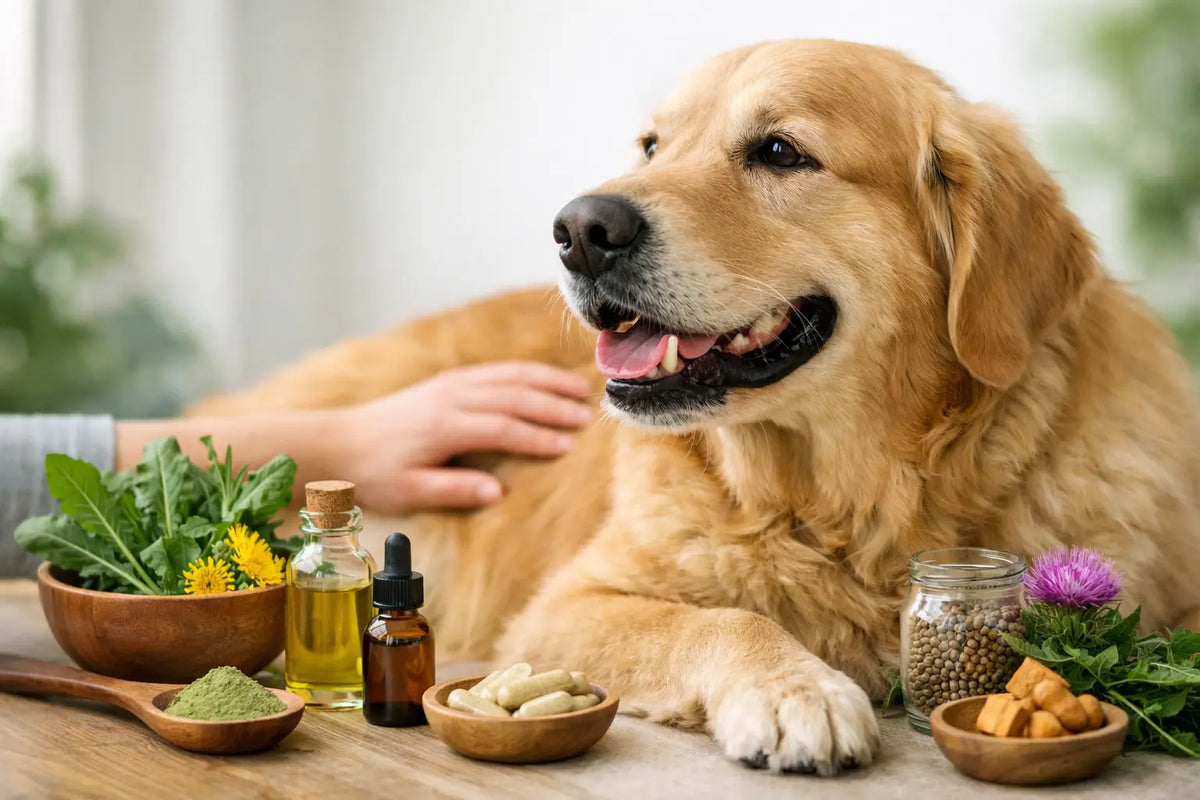
A dog that eats with less enthusiasm, appears more tired than usual, or has recurring digestive episodes deserves attention: the liver works tirelessly to transform nutrients, manage waste substances, and support the body's balance. Understanding how to naturally support a dog's liver means intervening with good habits, targeted nutrition, and functional supplementation, without ever replacing the veterinarian’s diagnosis.
The starting point is simple but crucial: natural support is useful when chosen based on the dog’s real needs. There are no universal remedies, especially if altered blood values, ongoing treatments, or persistent symptoms are present. In these cases, a clinical visit and blood tests recommended by the veterinarian are what truly protect the dog.
Why a dog’s liver may need support
The liver is one of the most metabolically active organs. It produces bile, helps digest fats, participates in regulating sugars and proteins, stores nutrients, and is involved in the metabolism of numerous substances. For this reason, it can be stressed by very different factors: advanced age, overweight, unbalanced diet, certain medications, infections, endocrine diseases, or individual predispositions.
Not all gastrointestinal disorders indicate a liver problem. Vomiting, soft stools, loss of appetite, or decreased energy can have many causes, some trivial and others more serious. Signs such as yellowish mucous membranes, swollen abdomen, marked weight loss, very dark urine, disorientation, or repeated vomiting require prompt veterinary contact.
This is where a protective and concrete approach is needed: observe the dog, avoid improvisation, and support liver physiology during times when it needs it most. Blood chemistry tests may include parameters such as ALT, AST, ALP, GGT, bilirubin, and bile acids, always interpreted within the complete clinical picture. An out-of-range value is not a diagnosis but useful information to decide how to proceed.
How to naturally support a dog’s liver every day
The first form of protection is the food bowl. A complete, digestible diet proportionate to size, age, and activity level reduces excesses that can burden the body. If the dog has a confirmed liver disease, the diet should be defined with the veterinarian: needs may change depending on the diagnosis, presence of cholestasis, possible copper accumulation, or specific metabolic alterations.
For a healthy dog or in a prevention phase, it is useful to avoid constant food changes, very fatty leftovers, excessive snacks, and uncontrolled treats. Caloric excess also matters: maintaining ideal weight means easing the workload of the entire metabolism, not just the liver. Fresh water must always be available, as hydration and intestinal regularity contribute to overall well-being.
Be careful with products brought into the home. Human medications, supplements not intended for animals, grapes and raisins, xylitol, certain plants, and unsuitable foods can pose real risks. Natural choice does not automatically mean safety: even plant extracts and essential oils, if used without expertise, can be inappropriate or interfere with prescribed therapies.
Another real help comes from routine. Walks suited to physical condition, regular exercise, and stress management promote correct weight and better quality of life. Intense activities are not necessary: for many dogs, consistent outings, moderate play, and adequate rest offer more benefit than sporadic, excessive efforts.
The most interesting natural ingredients for liver health
When the veterinarian deems supplementation appropriate, the quality of the formulation matters as much as the ingredient list. Liver support should not be based on generic promises but on selected active ingredients, proper dosages, and clear usage instructions.
Milk thistle and silymarin
Milk thistle is among the most studied plants for liver support. Its complex of active substances, called silymarin, is the subject of studies for its antioxidant action and support of the liver cells’ natural functions. In veterinary literature, it is considered an aid in specific protocols but is not a substitute for therapies nor does it alone cure liver disease.
Standardization is fundamental. Simply saying “contains milk thistle” is not enough: a high silymarin content allows better knowledge of the extract’s quality. In case of ongoing medications, the veterinarian must always verify the compatibility of the supplementation.
Betaine, B vitamins, and zinc
Betaine participates in metabolic processes related to methylation and lipid metabolism. For this reason, it is often included in nutraceutical formulas designed for physiological liver support. B vitamins contribute to normal energy metabolism and help cover essential biochemical functions, especially when the diet is not varied, the animal is recovering, or individual needs have increased.
Zinc is also a micronutrient of interest: it plays important roles in many enzymatic systems and in the body’s antioxidant defense mechanisms. However, it should not be administered “by guesswork.” Dosage and appropriateness depend on the dog, diet, and condition to be managed.
Resveratrol and antioxidant support
Oxidative stress can be involved in various inflammatory and metabolic processes. Resveratrol is a polyphenol studied for its antioxidant properties; in a veterinary formulation, it can complement other nutrients with the goal of physiological support. Here too, a clarification is necessary: experimental studies and evidence on single molecules do not authorize shortcuts. Real benefit depends on the clinical picture, the complete formula, and professional supervision.
Targeted supplementation, not an improvised remedy
For those seeking a product formulated specifically for dogs, Epapet by Aloeplus Cani e Gatti combines milk thistle standardized to 80% silymarin, L-betaine, resveratrol, zinc picolinate, and a complex of B vitamins, along with vitamin D3 and folic acid. It is a combination designed to offer targeted nutritional support for the physiological function of the liver and metabolism, with selected ingredients in a single practical solution to integrate into the routine.
The advantage of a complete formula is avoiding random overlaps among many different products. However, “more” does not mean “better”: do not combine liver supplements, vitamins, or plant extracts without consulting the veterinarian. This is even more important for older dogs, those on drug therapy, or animals with an already defined diagnosis.
Administration must follow label instructions and professional advice. If the dog refuses the product or shows gastrointestinal changes, do not force it: stopping and seeking guidance is a responsible act of care.
When prevention must give way to investigations
Supporting the liver naturally can be a sensible choice during seasonal changes, weight control programs, after periods of irregular feeding, or as part of an agreed wellness routine. But if the dog shows symptoms, the goal is not to “cover up” the problem: it is to understand what is causing it.
The veterinarian may decide to repeat tests, request an abdominal ultrasound, evaluate the diet, or modify a therapy. In the presence of liver disease, a supplement can be a useful aid, but the correct strategy always starts with diagnosis. It is this balance between nature, expertise, and monitoring that truly protects your companion.
Caring for a dog’s liver means choosing measured actions every day: a suitable bowl, weight control, no DIY solutions, and quality nutraceutical support when needed. The most valuable result is not a quick promise but a dog cared for attentively, with energy and respect for its real needs.