
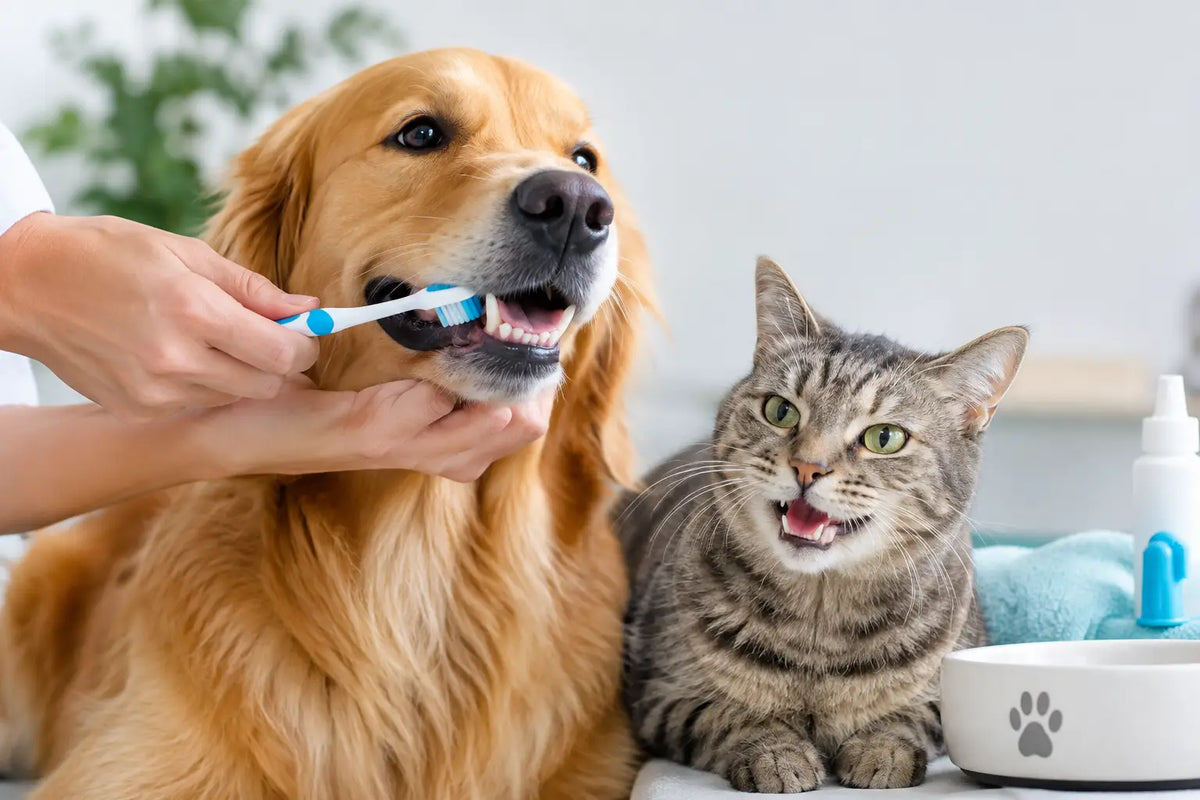
Bad breath after a kiss, redder-than-usual gums, or a piece of kibble left in the bowl can be the first signs of an oral problem. Understanding how to reduce dental plaque in dogs and cats means acting before a soft, almost invisible deposit turns into tartar, inflammation, and pain. It is not merely a cosmetic detail: a healthy mouth helps pets eat, play, and live more comfortably.
Plaque cannot be removed with a single gesture or an improvised remedy. It requires a realistic routine, built around the animal's needs and supported by a veterinarian when the signs suggest periodontal disease. Daily prevention, however, can make a real difference.
What dental plaque is and why it comes back
Dental plaque is a soft film made up of bacteria, food residue, and components of saliva. It continually builds up on the surface of the teeth, especially along the gumline and on the back teeth, where it is more difficult to reach. If it is not removed regularly, it can mineralize into tartar.
Tartar is hard, adheres to the enamel, and cannot be removed with a household toothbrush. It requires professional cleaning performed by a veterinarian. Waiting for an obvious brown coating to appear is not a good strategy: inflammation may already be present below the gumline, where it cannot be seen with the naked eye.
Dogs and cats do not face the same risks at every stage of life. Small and brachycephalic dogs, for example, may have more closely spaced teeth and accumulate residue more easily. In cats, in addition to plaque and gingivitis, specific conditions such as tooth resorption should be considered. This is often painful and cannot be resolved through home hygiene alone. Age, mouth structure, diet, and chewing habits all play a role.
How to recognize plaque buildup
An animal may continue eating even when it has oral discomfort. For this reason, it is worth watching for small changes rather than waiting for it to stop eating. Persistent bad breath is one of the most common signs, but it is not the only one.
Gently check the gumline when your pet is calm. Red gums, bleeding, yellowish deposits near the teeth, increased drooling, or discomfort when touched deserve attention. Chewing on only one side, dropping food, frequently licking the lips, withdrawing, or showing irritability may also indicate pain.
Do not try to scrape tartar away with metal instruments or sharp objects. You could injure the gums and enamel, frighten the animal, and make all subsequent care much more difficult. A veterinary examination can determine whether it is simply early plaque, whether a professional dental cleaning is needed, or whether deeper dental problems are present.
How to reduce dental plaque every day
The most effective solution remains frequent mechanical removal, adapted to the dog's or cat's temperament. It should not become a battle: consistency comes from short, gentle actions associated with a positive experience.
A toothbrush is the most valuable step
Brushing the teeth every day is the habit that offers the most direct control over plaque. Use a veterinary toothbrush with soft bristles or a finger brush, together with toothpaste formulated for animals. Human toothpaste is not suitable: it may contain substances that pets must not ingest, such as xylitol, and it should never be used as an alternative.
At first, do not try to clean the whole mouth. For a few days, simply touch the muzzle and cheeks, then lift the lip for a moment, and finally massage the outer teeth. Reward cooperation with a calm voice, play, or a treat compatible with the animal's diet. In dogs, the canines and outer molars are often easier to reach; cats need even shorter and more patient sessions.
The ideal frequency is daily because plaque returns quickly. If that is not possible, a well-tolerated routine several times a week is better than a forced, traumatic session once a month. A frightened animal is not "being difficult": it is communicating that the process needs to be slowed down or that there may be discomfort in the mouth.
Chews and diet: helpful, but not miraculous
Dental chews designed for pets and foods with a specific mechanical action can help limit buildup on the surfaces reached through chewing. However, they do not replace brushing, because they do not clean the gumline evenly or the spaces between the teeth.
The choice should be tailored to the individual animal. A product that is too hard can put the teeth at risk, especially in older pets or those with compromised dentition; highly caloric treats may be unsuitable for an overweight dog or cat. Cooked bones, extremely hard antlers, mineral stones, and improvised objects are not safe solutions: they can cause dental fractures or digestive problems.
Dry food alone does not guarantee clean teeth. Ordinary kibble often breaks apart without providing enough cleaning action. It is worth choosing the diet based on your pet's overall nutritional needs and discussing it with your veterinarian, rather than attributing a role to food that it cannot fulfill on its own.
Natural oral support: where it can help
Oral-support products formulated for dogs and cats can complement daily hygiene, especially when owners are looking for a practical solution to incorporate into their routine. They should have a clear purpose: supporting fresh breath and oral balance, not promising to dissolve existing tartar or replace dental treatment.
Aloeplus Cani e Gatti develops functional solutions for pet well-being using an approach based on natural ingredients and processing methods designed to preserve their integrity, such as the HDR cold method. Aloe Arborescens and carrot are central elements of the brand's formulation philosophy: their use is part of daily care focused on comfort, protection, and prevention, always alongside proper oral hygiene practices.
For a dog or cat that does not readily accept a toothbrush, an oral-support product can provide practical help in building the habit, but it must not become an excuse to postpone a mouth checkup. Before choosing any product, consider the species, age, diet, medical conditions, current medications, and your veterinarian's advice.
When professional cleaning should not be postponed
If there is visible tartar, very strong breath, bleeding, swelling, loose teeth, or difficulty eating, home care is not enough. A veterinarian can perform a complete oral examination and determine whether professional dental cleaning is needed, often together with a more thorough assessment of the teeth below the gumline.
Dental scaling is not a cosmetic treatment. It removes deposits and makes it possible to address the conditions that promote infection and pain. Veterinary guidelines on oral health emphasize this point: effective cleaning requires clinical assessment, appropriate equipment, and monitoring of the animal, not superficial or do-it-yourself procedures.
After treatment, prevention becomes even more valuable. Ask your veterinarian how often to brush, which chews are safe, and how to check your pet's mouth at home. Some pets need more frequent checkups because of their structure or predisposition, while others maintain good oral health with a consistent routine.
A short routine your pet can accept
The best time is the one you can genuinely repeat: after the evening walk for a dog, or during a calm part of the day for a cat. Keep the chosen tool close at hand, work for just a few seconds, and always finish with something enjoyable.
Oral care does not require immediate perfection. It requires observation, gentleness, and the decision not to normalize bad breath, red gums, or difficulty chewing. Every small, calm cleaning session is a meaningful investment in the daily well-being of your family companion.