
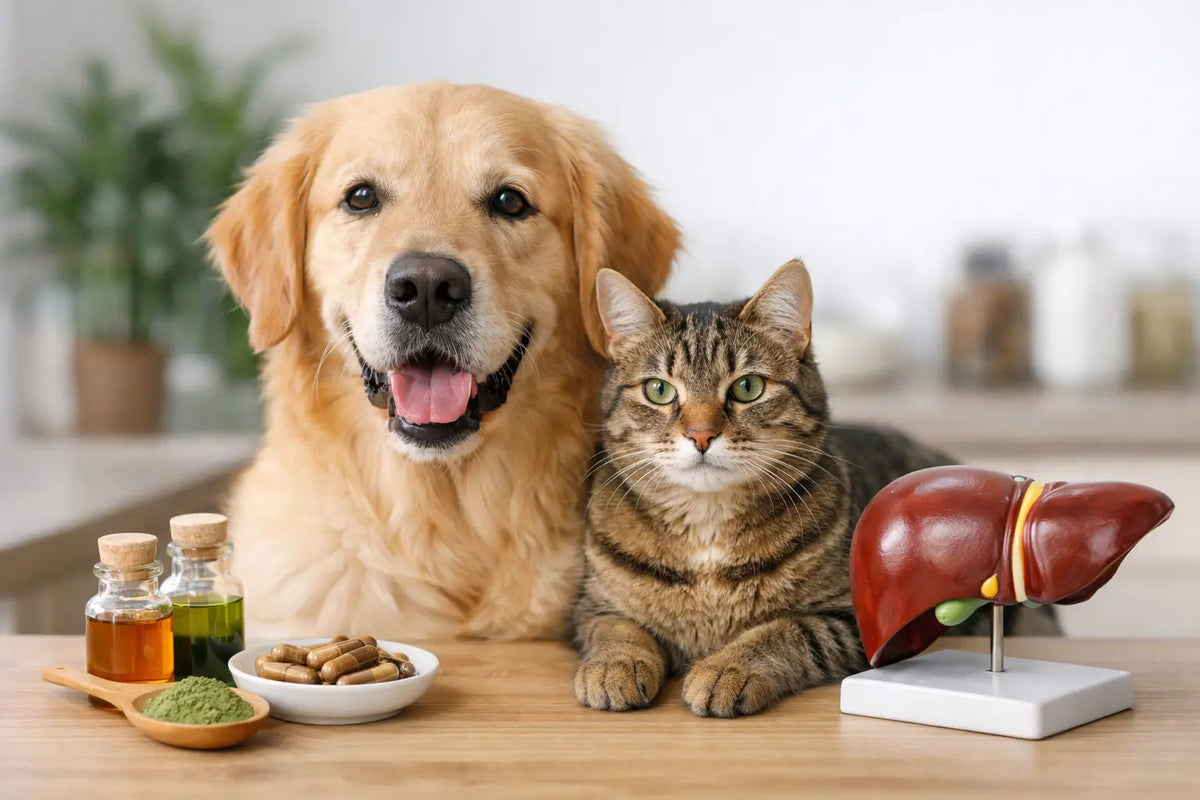
When a dog or cat appears more tired than usual, eats with less enthusiasm, digests poorly, or shows abnormal test results, the liver is immediately one of the first organs to consider. This liver support guide for dogs and cats starts from here: to help you understand when targeted support is needed, which signs not to overlook, and which natural ingredients can truly make a difference.
The liver is a central organ for the animal’s well-being. It participates in nutrient metabolism, helps manage toxins and medications, produces substances useful for digestion, and contributes to the overall balance of the body. For this reason, when it is under stress, the signs can be very different from each other and not always easy to interpret immediately.
Liver support guide for dogs and cats: when it’s really needed
There is no single clinical picture. In some animals, liver support is useful after prolonged drug therapies, in others during recovery periods, in cases of suboptimal nutrition, old age, overweight, or blood chemistry changes that need monitoring with the veterinarian. Sometimes the problem is obvious; other times the liver asks for help silently.
The most common signs are reduced appetite, slow digestion, episodes of vomiting, irregular bowel movements, fatigue, decreased liveliness, dull coat, and unexplained weight loss. In more severe cases, clearer clinical signs may appear, but it is not necessary to wait for an advanced situation to consider support. Prevention, when well planned, is often the smartest choice.
Here is a crucial point: nutraceutical support does not replace veterinary diagnosis. If tests show abnormal values or the dog or cat has persistent symptoms, the cause must always be clarified. The liver can be affected by many different conditions, and treating them all the same way would be a mistake.
Why the liver of dogs and cats can become stressed
The liver works tirelessly. It manages the metabolism of fats, proteins, and carbohydrates, stores energy, participates in detoxification, and supports essential processes for the entire body. This means that any prolonged imbalance can challenge it.
In dogs, situations often relate to overly rich diets, overeating, long-term therapies, mature age, and individual predispositions. In cats, the issue deserves even more attention because the feline metabolism is delicate, and even short periods of poor appetite can have significant consequences. This is the classic case where “let’s see if it passes” is not a good strategy.
Oxidative stress and inflammation also play a role. When liver cells are exposed to a high metabolic load, support with targeted active ingredients can help protect the organ’s function and promote better overall balance. It’s not a miracle cure, but a sensible approach if well formulated and integrated into a proper plan.
The ingredients that make the most sense in liver support
When choosing a liver supplement, the quality of the formula matters much more than the “full label” effect. A few well-dosed and coherent active ingredients are worth more than a confusing mix.
Milk thistle is one of the most solid references. Its most studied component is silymarin, known for its antioxidant action and support of liver function. In veterinary and pharmacological literature, it is frequently considered a useful aid in cases of liver stress and support protocols. It does not act alone on everything, but it is one of the most credible pillars when talking about the liver.
Betaine is another interesting ingredient because it participates in liver metabolism and the proper use of fats. This aspect is particularly useful when the liver has to manage significant metabolic loads. B vitamins act as cofactors in many metabolic reactions: in practice, they help the body do well what it should already do, but more efficiently.
Zinc, in a highly bioavailable form such as picolinate, is involved in numerous enzymatic processes and in maintaining cellular balance. Resveratrol adds antioxidant support that can be useful in contexts of oxidative stress. Nutrients like niacin, pantothenic acid, folates, and vitamin B12 also make sense in a formula designed to support metabolic energy and liver function.
The point is not to add “trendy” ingredients, but to create a real synergy. A well-thought-out formula should aim at cellular protection, lipid metabolism, enzymatic support, and functional recovery.
How to choose a nutraceutical support without getting confused
The first question to ask yourself is simple: is this product really formulated for the liver, or does it promise general well-being? In the second case, the risk is using something unfocused and expecting too much.
A good liver support for dogs and cats should have active ingredients with a clear rationale, sensible dosages, high tolerability, and ease of administration. The last point matters more than it seems. If the supplement is hard to give, continuity breaks, and without continuity, the result weakens.
Transparency from the manufacturer also counts. A serious brand explains the function of the ingredients, the context of use, and the product’s limits, without turning every supplement into a universal cure. Overly aggressive communication in this area is often a bad sign.
A targeted solution: the rationale of Epapet
When the goal is to support the liver concretely, a formula like Epapet has a precise logic. Milk thistle standardized to 80% silymarin represents the heart of the support, thanks to its recognized protective and antioxidant action on liver cells. Alongside this, L-betaine works on liver metabolism, while resveratrol helps counter oxidative stress.
The presence of B vitamins, zinc picolinate, and vitamin D3 completes an approach that does not just “defend” the liver but also supports the metabolic processes involved in restoring balance. This is an important difference: not only protection but also functional support.
For those seeking a natural but serious aid, this approach is particularly valid. It does not rely on ingredients placed just for show but on a combination that meets a real need of dogs and cats. In this sense, Aloeplus Dogs and Cats works with an approach consistent with its identity: specialist formulations, attention to quality, and a concrete vision of animal well-being.
What to expect, and in how much time
Honesty is needed on this topic. Liver support does not always show dramatic signs in a few days. In some animals, improvements in appetite, increased energy, and more regular digestion are observed fairly quickly. In others, benefits emerge mainly in clinical checks or in general stability over the medium term.
It depends on the cause of the problem, age, diet, any ongoing therapies, and the degree of functional impairment. A simply fatigued liver can respond well to targeted intervention. A structured pathological condition requires a more complex plan, and the nutraceutical becomes one piece, not the only answer.
For this reason, consistency matters. Even the right product, if used inconsistently or without following veterinary advice, risks delivering less than it could.
Liver support and daily management: what really makes a difference
The supplement works better if integrated into a consistent routine. Controlled diet, adequate body weight, proper hydration, and veterinary monitoring are part of the same effort. If the dog gets many table scraps or the cat eats little and poorly, no formula can fully compensate.
For more sensitive subjects, it is also wise to think preventively, especially after therapy periods, in old age, or during seasonal changes that challenge the body. Liver support should not be seen as a remedy to use only “when things go wrong,” but as an intelligent tool for protection and maintenance.
On the scientific level, silymarin has been the subject of numerous studies for its hepatoprotective and antioxidant properties, while betaine and B vitamins are well known for their role in liver metabolism. This does not mean turning a supplement into a drug, but recognizing that some substances have a solid rational basis and deserve a place in a well-constructed support program.
If there is a simple rule to keep in mind, it is this: listen to your animal’s signals before they become big problems. The liver works silently, but when you support it with care, targeted nutrition, and the right ingredients, you often notice it through small, very concrete changes—more appetite, more energy, more balance every day.