
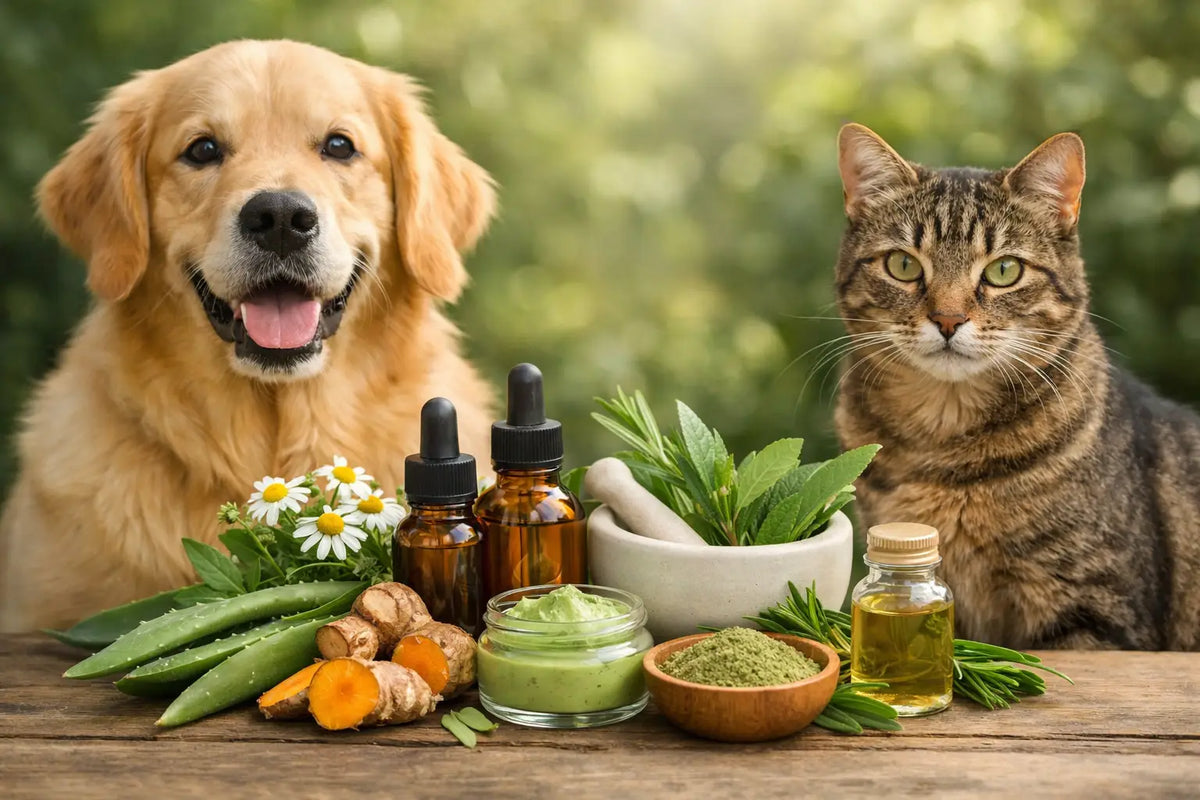
When the dog struggles to get up, the cat often shakes its head, or the skin becomes red and itchy, there is no need to chase random remedies. Natural veterinary active ingredients are valuable when they address a specific need, are included in formulas designed for the animal, and are used consistently, without replacing a veterinary diagnosis when symptoms persist.
Natural does not automatically mean effective or free of precautions. It means being able to choose ingredients of plant, marine, or nutritional origin with a concrete function: to soothe, cleanse, protect the skin barrier, support mobility, or supplement a diet during specific life stages. The difference lies in the quality of raw materials, concentration, combination of active ingredients, and correct use.
Natural veterinary active ingredients: function matters
A functional product is not judged by the length of the label but by the consistency between the problem and the formulation. An elderly dog with joint stiffness does not have the same needs as a puppy with dry paw pads. An ear with a bad odor requires gentle hygiene and targeted checks, not a generic product to apply everywhere.
Aloe Arborescens is one of the most interesting active ingredients in dermofunctional and nutraceutical formulations. Its polysaccharides are appreciated for their emollient action and support of the skin’s physiological hydration. In topical use, aloe is employed to provide comfort to areas subject to dryness or irritation. Although much of the literature on aloe and skin repair comes from experimental and human studies, it suggests potential linked to modulation of local inflammation and support of the skin barrier.
Carrot complements this approach with carotenoids and antioxidant components. In formulas dedicated to the skin, its role is particularly useful when the skin appears dull, dehydrated, or exposed to external stress. It is not a shortcut to solving complex dermatitis, allergies, or infections but can be a daily ally in a well-structured care program.
Joints: support for mobility, not easy promises
A reduced desire to jump, slowness in getting into the car, and stiffness after rest deserve attention. Age is not the only cause: overweight, intense activity, conformation, and previous injuries can affect joint well-being. Before supplementing, it is essential to rule out acute pain or conditions requiring a specific veterinary plan.
For nutritional support of joints, the combination of Perna canaliculus, Boswellia serrata, devil’s claw, spirulina, and plants rich in natural pigments is interesting for complementary functions. Perna canaliculus, the green-lipped mussel from New Zealand, contains fatty acids and glycosaminoglycans. Veterinary reviews and studies on dogs with osteoarthritis have found possible benefits on mobility and comfort, with results depending on dose, duration, and severity of the condition.
Boswellia and devil’s claw are traditionally studied for their role in controlling inflammatory processes. Realism is needed here as well: they do not replace prescribed medications nor correct a compromised joint but can complement proper nutrition, ideal weight, and controlled movement. Artricur Pet combines Aloe Arborescens, Perna canaliculus, black carrot, spirulina, devil’s claw, Boswellia serrata, beetroot, and orange carrot precisely to offer targeted functional support for dogs and cats showing reduced ease of movement.
Skin, paws, and coat: the barrier comes first
Itching, redness, and paw licking are common signs but have very different causes: contact with irritants, dry skin, parasites, allergies, infections, or pain. If the dog scratches incessantly, develops crusts, bad odor, hair loss, or lesions, the priority is a veterinary visit. Applying soothing products on infected skin without understanding the problem can delay proper treatment.
When the need is to protect a stressed area and promote softness, aloe and carrot work well alongside film-forming and nourishing ingredients. Urea, shea butter, sweet almond oil, and vitamin E help retain hydration and make the skin surface more elastic. Zampet is designed for paw pads, the nose leather, and small dry areas: useful after walks on hot asphalt, intense cold, sand, or rough terrain.
For localized comfort, Dermogel combines aloe, carrot, and peppermint. The refreshing sensation can be pleasant on tired areas, provided the product is used as directed and kept away from eyes, mucous membranes, and deep wounds. Dermospray combines aloe, calendula, propolis, and tea tree oil in a formulation intended for the skin. Calendula and propolis are well-known ingredients in dermocosmetic tradition for their soothing and purifying properties; tea tree always requires special care, especially in cats, and must be used exclusively in veterinary products formulated for the intended use, never as pure essential oil.
Ears and eyes: delicate, never improvised
An ear that emits a bad odor, has dark wax, or causes the animal to scratch is not a cosmetic detail. Otitis, foreign bodies, parasites, and alterations of the local flora require veterinary evaluation. An ear cleanser is useful for normal hygiene or as support to the plan indicated by the veterinarian; it should not mask pain, secretions, or head tilting.
Otorì ear cleanser combines aloe, calendula, propolis, coconut oil, and tea tree oil to gently cleanse and contribute to the comfort of the external ear pavilion. Correct application is part of the result: use the indicated amount, gently massage the base of the ear, and let the animal shake its head. Cotton swabs deep inside? Better to avoid them: they can push material toward the canal and further irritate.
Eyes also require careful handling. Tearing, redness, closed eye, or yellowish discharge should not be treated as simple dirt. Oftocur, with aloe, chamomile, cornflower, and witch hazel, is a solution for daily periocular cleansing and to gently remove residues and light secretions. It is not a medicated eye drop and does not replace veterinary intervention if the eye appears painful or altered.
Liver supplementation: natural must be chosen with even more rigor
The liver participates in the metabolism of nutrients and drugs, so integrative support must be evaluated based on the animal’s clinical history and blood tests. Milk thistle standardized in silymarin, betaine, zinc, and B vitamins are ingredients present in formulas dedicated to liver metabolism. Silymarin is studied for its antioxidant and hepatoprotective support properties, but clinical response varies and does not authorize self-medication in case of altered values.
Epapet combines milk thistle with 80% silymarin, L-betaine, resveratrol, zinc picolinate, and selected vitamins. It can be part of a supplementation plan agreed with the veterinarian, especially when diet, lifestyle, and periodic checks must work in the same direction.
In the Aloeplus Dogs and Cats range, the HDR cold processing is designed to enhance the active ingredients of raw materials, starting from the patented formula with Aloe Arborescens and carrot. It is a useful approach only if accompanied by choosing the right product and having correct expectations: a good formulation supports well-being, it does not promise miracles.
Observe your animal in small daily changes: a licked paw, a jump avoided, a more sensitive ear. Early intervention with targeted care and veterinary advice when needed is one of the most concrete ways to protect their well-being every day.