
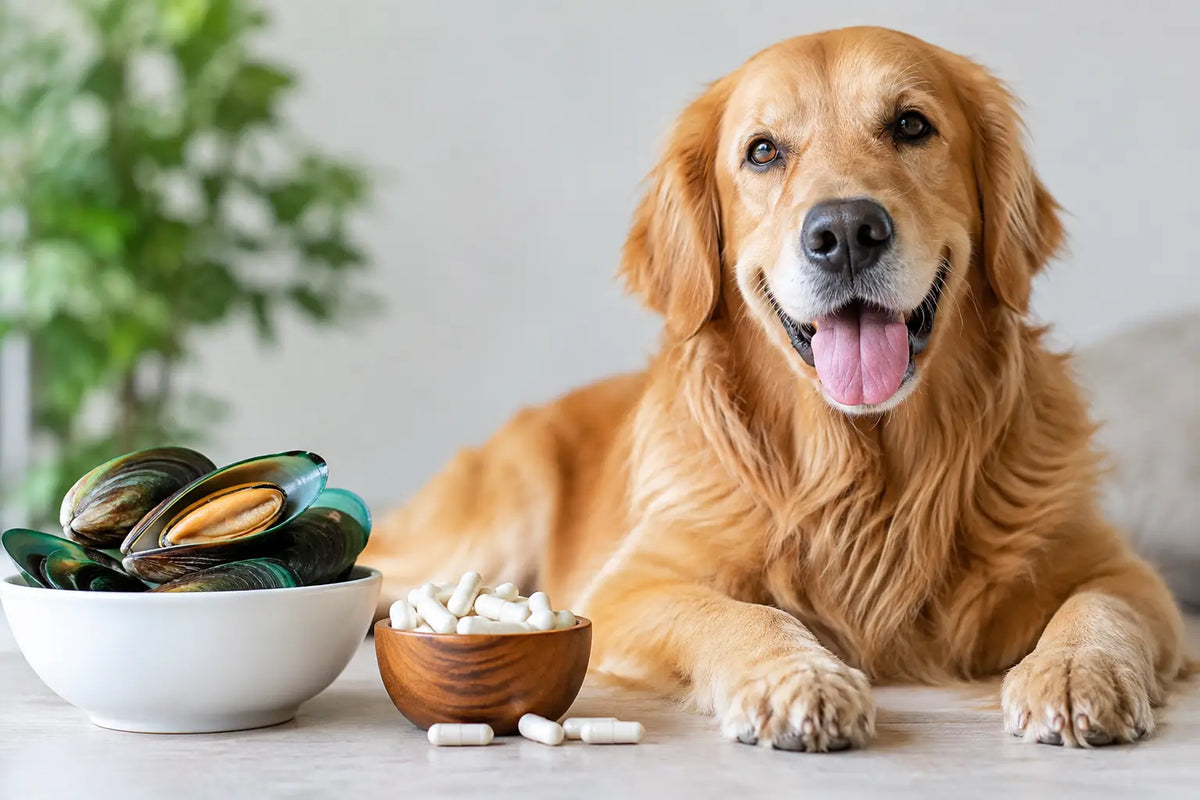
When searching for “Perna Canaliculus or glucosamine for dogs,” there is almost always a real concern behind the question: the dog gets up more slowly, avoids stairs, seems stiff after resting, or no longer runs with the same enthusiasm. These are not signs to dismiss as simple old age. Mobility is part of their quality of life and deserves thoughtful support, especially when the joints and cartilage begin to require more attention.
Perna canaliculus and glucosamine are two ingredients often associated with joint health, but they are not equivalent. Understanding how they work helps you choose a more suitable functional supplement for the individual dog’s needs, without chasing easy promises.
Perna canaliculus or glucosamine for dogs: what’s the difference?
Glucosamine is a substance naturally present in the body and involved in the formation of glycosaminoglycans, components of the cartilage matrix. In supplements, it is generally offered as glucosamine sulfate or hydrochloride, with the aim of supporting cartilage metabolism and the comfort of joints subjected to wear.
Perna canaliculus, also known as the New Zealand green-lipped mussel, has a more complex profile. It is a marine raw material that contains glycosaminoglycans, omega-3 fatty acids, including EPA and DHA, as well as other distinctive lipids, amino acids, and minerals. It therefore does not provide a single element, but rather a combination of compounds that may contribute to physiological osteoarticular well-being.
The main difference lies here: glucosamine provides targeted support for one component of cartilage structure; Perna canaliculus offers broader nutritional action, useful when joint fragility is accompanied by stiffness and reduced ease of movement. This does not mean that one choice always excludes the other. In many nutraceutical approaches, different ingredients are combined precisely to address several aspects of joint function.
When a dog’s joints begin to show signs
Age is an important factor, but it is not the only one. A large-breed dog, an overweight animal, a highly active dog, or one with a history of trauma may develop joint problems even before reaching senior age. Certain body structures, breed predispositions, and periods of intense growth also warrant careful veterinary assessment.
The most common signs are often subtle at first: the dog hesitates before jumping into the car or onto the sofa, changes position frequently while resting, limps for a few steps after waking, or spontaneously reduces walks and play. Irritability when the hips, elbows, or back are handled may also indicate discomfort.
In the presence of sudden pain, persistent lameness, swelling, complete reluctance to bear weight on a limb, or marked changes in behavior, a supplement does not replace a veterinary examination. A diagnosis is needed first: osteoarthritis, dysplasia, ligament injuries, and inflammatory conditions require different approaches. Supplementation can provide valuable support, but it must fit into a coherent plan.
What research says about the New Zealand green-lipped mussel
Veterinary literature on Perna canaliculus is interesting, although it requires balanced interpretation. Clinical studies conducted on dogs with osteoarthritis have observed improvements in mobility and pain assessments after the use of diets or supplements containing green-lipped mussel. A study published in the Journal of Veterinary Internal Medicine found clinical benefits in dogs with osteoarthritis fed a diet enriched with Perna canaliculus lipid extract.
A review of the evidence on joint supplements in veterinary medicine also highlights that marine omega-3s and certain nutraceuticals may play a role in supporting osteoarthritis management. The key factors are the quality of the formulation, the standardization of the raw material, and consistent use. Not all extracts are the same, and not all dogs respond in the same way.
Glucosamine, for its part, is widely used, but the available studies show more variable results. This does not make it useless: it may be a sensible component in certain formulations and protocols decided on by the veterinarian. However, for a dog whose mobility is already impaired, relying exclusively on a single nutrient may be limiting compared with an approach that includes several functional active ingredients.
Why a complete formula can make a difference
A joint is made up of more than just cartilage. There are periarticular tissues, muscles, joint capsules, and an inflammatory balance that affects how a dog moves every day. For this reason, a well-designed nutraceutical formula should consider the overall picture, not just a fashionable ingredient.
In Artricur Pet, Aloeplus Cani e Gatti combines Perna canaliculus with Aloe arborescens, black carrot, spirulina, devil’s claw, Boswellia serrata, red beetroot, and orange carrot. It is a combination designed to support dogs showing stiffness, reduced movement flexibility, or a need for ongoing joint support.
Perna canaliculus provides its marine nutritional profile. Boswellia serrata and devil’s claw are traditionally used to support joint function, while spirulina and colorful vegetables provide micronutrients and compounds naturally found in plants. Aloe arborescens and carrot represent the distinctive core of the Aloeplus approach: selected raw materials processed cold using the HDR method, designed to preserve their functional characteristics.
The aim is not to choose a “miracle” ingredient, but to offer the body complete, continuous support. This is what makes a targeted formulation more sensible than improvised solutions or products chosen simply because they display a familiar name on the label.
How to choose between Perna canaliculus and glucosamine
The choice depends on the dog’s age, weight, activity level, and the presence of a veterinary diagnosis. For a young, healthy dog belonging to a predisposed breed or engaged in intense physical activity, the approach may be preventive and should be discussed with the veterinarian. For an adult or senior dog with recurring stiffness, a formula containing Perna canaliculus and other active ingredients may offer broader support in everyday life.
Maintaining a healthy body weight remains essential. Even the best supplement cannot offset the excessive joint load caused by extra weight. Regular but proportionate walks, non-slip surfaces at home, ramps for the car or sofa, and a comfortable bed are simple measures that reduce mechanical stress.
Before starting a product, read the label carefully and follow the administration instructions. If the dog is receiving drug therapy, suffers from chronic conditions, is pregnant, or has reacted to mollusks or crustaceans, consulting the veterinarian is essential. Natural ingredients also require expertise, appropriate dosages, and observation of the individual response.
Realistic timelines for joint support
Joints do not regain comfort in a single day. Nutraceutical supplementation requires consistency and realistic evaluation over time, in agreement with the veterinarian. Some owners notice that their dog is more willing to go for walks or is less stiff upon waking after a few weeks; for others, the change is more gradual.
Careful observation helps: How long does the dog take to get up? Does it still seek out play? Does it tackle the stairs with less hesitation? It is useful to note these elements before and during the process, because small daily improvements often tell you more than a general impression.
Protecting the joints means preserving the dog’s freedom to enjoy its days: sniffing the grass, joining you on a walk, and climbing onto the sofa beside you. An informed nutraceutical choice, combined with veterinary advice and good daily habits, can become a concrete act of care for that family companion who deserves to move well for as long as possible.