
A dog slowing down on scorching pavement, a cat persistently licking one paw, or small cuts between the paw pads are not details to ignore. Understanding when to apply paw cream helps you intervene before dryness, irritation, and micro-injuries make every step less comfortable. Caring for paw pads is simple, but it should be done at the right time and with a formula designed for animals.
Paws are not invulnerable
Paw pads are designed to withstand weight, friction, and changing temperatures. However, they have their limits: hot asphalt, ice, de-icing salt, rough terrain, sand, household cleaners, and repeated licking can weaken their natural protective function. Dogs that take part in sports activities, older animals, and pets with particularly sensitive skin may also need more regular attention.
In cats, the problem may be less visible because they often spend a great deal of time indoors. Even so, floors cleaned with irritating products, dusty litter, hot balconies, or minor abrasions can cause discomfort. If your cat retracts its paw, limps, licks it persistently, or dislikes having it touched, a thorough check is needed.
Cream does not replace a veterinary assessment when there is a deep wound, marked pain, bleeding, swelling, discharge, a bad smell, or persistent limping. In these cases, applying a cosmetic product without understanding the cause may delay proper treatment.
When to apply paw cream
There is no single answer: frequency depends on the environment, season, and condition of the skin. In general, paw cream should be applied to clean, dry paw pads, especially when early signs of dehydration appear or after exposure that may stress the skin.
Before and after more demanding walks
In summer, asphalt absorbs heat and can reach dangerous temperatures even when the air seems bearable. A practical test is to place the back of your hand on the surface for a few seconds: if it is too hot for you, it is too hot for paw pads as well. The priority should still be going out during cooler hours and choosing grass, packed earth, or shaded areas. An emollient cream applied after the walk can help keep the paw surface soft, but it is not a license to walk on scorching asphalt.
In winter, salt, ice, mud, and chemical residues on roads easily collect between the toes. When you return, rinse the paws with lukewarm water, dry them thoroughly, including between the toes, and apply cream if you notice roughness or dry skin. On more exposed routes, a small amount before going out can create a supportive emollient film. It is useful, but it should be reapplied as needed: mud and water quickly reduce its effectiveness.
When the paw pads are dry, rough, or cracked
A healthy paw pad looks supple, intact, and free of particularly hard or peeling areas. If it instead feels rough, looks dull, is more rigid than usual, or has small superficial cracks, it is time to start a daily routine. Apply a minimal amount, gently massaging until absorbed, without leaving buildup between the toes.
Consistency matters more than quantity. An excessive layer can make the paw slippery on the floor and encourage the animal to lick it. It is better to use a small amount regularly, ideally when the dog or cat is relaxed - for example, in the evening, after cleaning and before bedtime.
After the beach, mountains, and strenuous activity
Sand, salt water, rocky trails, and long hikes increase friction and can draw moisture from the skin. After a day at the beach, rinsing is essential: salt left on the pads can contribute to dryness and discomfort. In the mountains, also check for thorns, small stones, or cuts between the toes.
For active dogs that run, do agility, or accompany the family on hikes, checking the paws should become a normal part of returning home. There is no need to wait for an injury to appear: treating a paw pad that is just beginning to harden or become dehydrated is easier than dealing with a painful crack.
Signs that require immediate attention
Licking a paw once can be normal. Doing so continuously, however, often indicates discomfort. Observe whether the animal changes how it bears weight, avoids certain surfaces, stops during walks, or shows irritation when you touch the paw pads.
In good light, check the underside of the paw, the spaces between the toes, and the nails. Mild redness and dry skin may benefit from targeted emollient treatment. If you find foreign objects, cuts, blisters, very warm areas, swelling, or pus, do not try to solve everything with cream: contact your veterinarian.
Particular caution is needed with irritating substances. Antifreeze, cleaners, fertilizers, and certain residues found on sidewalks can irritate the skin and become dangerous if swallowed during licking. If contact is suspected, rinse thoroughly with water and ask your veterinarian for advice, especially if salivation, vomiting, or lethargy occurs.
Which ingredients to look for in a paw cream
A good formula should soften, nourish, and help protect the skin without weighing it down. Urea, in appropriate cosmetic concentrations, is known for its humectant action and for supporting the barrier function of the stratum corneum. A review published in the Journal of Cosmetic Dermatology in 2021 describes its role in improving hydration and the quality of the skin barrier.
Shea butter and sweet almond oil provide emollient lipids that help counter the feeling of dryness and keep the skin softer. Vitamin E is valued in dermofunctional formulations for its antioxidant activity. Aloe, meanwhile, has long been used in topical products for its soothing and moisturizing effect: a scientific review published in the Iranian Journal of Medical Sciences in 2019 discussed its potential to support skin repair processes, while noting that results and indications depend on the formulation and clinical situation.
For those looking for a product specifically for dogs and cats, Zampet di Aloeplus Cani e Gatti combines aloe, carrot, urea, shea butter, sweet almond oil, and vitamin E. The aloe and carrot, enhanced by the HDR cold-processing method, are intended to support the daily routine of protecting and nourishing paw pads, especially during periods of greater environmental stress.
How to apply it correctly without causing discomfort
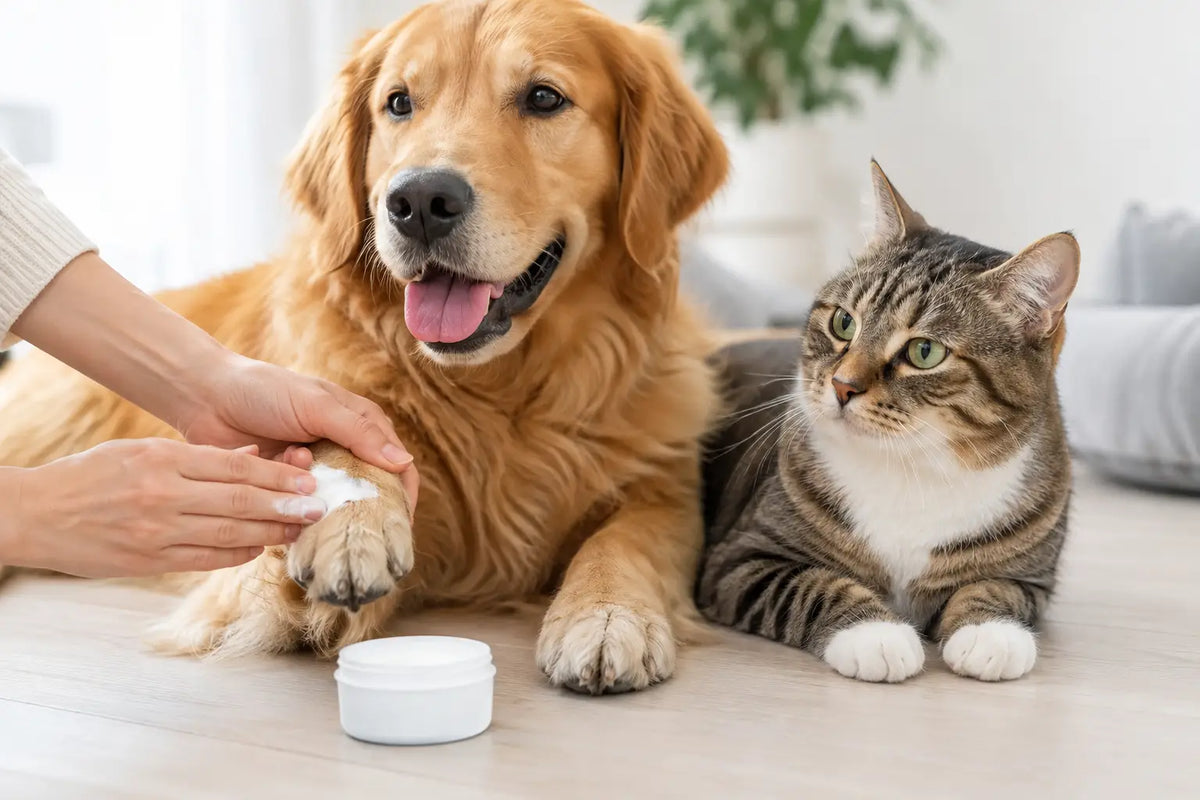
Choose a calm moment and gradually accustom the animal to having its paws handled. Lift the paw without forcing the joint, check the paw pads and the spaces between the toes, then apply a small dab of product and massage with slow movements. If the fur is long between the toes, gently separate the strands to prevent the product from remaining only on the coat.
After application, distract the animal for a few minutes with affection, quiet play, or a favorite activity, helping the product absorb before licking begins. If your dog or cat constantly tries to remove the product, use less and ask your veterinarian for advice: compulsive licking may be caused by pain, allergies, or other problems that need investigation.
The routine that truly protects
Cream works best when it is part of a practical routine: inspect the paws after outings, wash them gently when needed, dry them carefully, and pay attention to the surfaces they walk on. In summer, adjust the times of walks; in winter, remove salt and residues when you return. For sedentary animals or those that live mainly indoors, a weekly check is often sufficient; for athletic, older, or animals exposed to difficult terrain, it may become a daily habit.
Paws accompany your animal on every exploration, run, and shared moment. Caring for them with small, regular actions means giving them greater comfort today and noticing sooner anything that could limit them tomorrow.